Thursday, September 15, 2011

This Is The One!

John 1-3

This Gospel or "Good News" of Jesus is unlike the other three. There are some similar stories - baptism, miracles, teachings, crucifixion and resurrection. But John includes perspectives and angles and insights into these events from a different point of view. Not only that, but he has a lot of original material. The purpose of this gospel, as John states it is this: "...so you will believe that Jesus is the Messiah, the Son of God, and in the act of believing, have real and eternal life in the way he personally revealed it."

You can see this purpose at work in the first chapters. Chapter 1 includes the declaration that Jesus is the Messiah and the Son of God. Chapter 2 includes the first sign - turning water to wine at a wedding. Chapter 3 includes an invitation to believe and the promise of eternal life. As you read through John, you'll be looking to see how the case is built for why Jesus is the Messiah and the Son of God, and why he is worth trusting, worth believing in.

It was quite the controversial claim to make that Jesus was the Messiah. Israel was awaiting their "anointed one" to come and save them from the Empires. They wanted their Deliverer to free them from political and economic oppression so that they could be back on top again, like in King David's day. They wanted vengeance for all the terrible atrocities that had been committed against them. They wanted vindication - if we really are the people of God, then when will this benefit us? As you can imagine, there were big expectations for Jesus. 

But more than that, it was outrageous that the disciples of Jesus were proclaiming him as the Son of God. This was blasphemy! This was religiously unacceptable. It was also a political claim. The Caesars had been claiming the title of Saviour, of Son of God, of Prince of Peace. John was putting onto Jesus the title of the Emperors. This was a sure way to attract the spear-point of Rome. And it was a guaranteed way to fuel the wrath of the religious leaders.

We're so used to hearing Jesus referred to as the Son of God and as Christ (Greek for "anointed one") or Messiah (Hebrew for "anointed one"). But John lays out a sophisticated, nuanced, layered, dramatic, compelling, intriguing, memorable gospel for how we can believe that Jesus is indeed the Son of God and the Messiah. We all start in the dark about God. He comes as the light. What will we do with what he hear, with what we see?


Wednesday, September 14, 2011

Act On What You Hear

James 1

When you need guidance and direction in life, read this letter from James. Start at chapter one and start reading until he hits a nerve, until he says something startling, until he points out the obvious. There are so many times in life where we're not sure what to do next, not sure what God wants us to do. We then feel the urge to open up our Bible to discover a whiff of God's will for us. The next time this happens, open up to James and read.

Not all books in the Bible offer the same kind of wisdom and guidance. Some come across as more pertinent to our personal lives. James is that kind of letter - it's not a book - it's a heart-felt letter chock full of wisdom written to persuade and convince and instruct and reprimand. Just the kind of letter you need to read. Again. And again. And again.

James is the brother of Jesus. He was once an unbeliever. He was once against Jesus. Even jealous and embarrassed. Can you relate to any of that? James is writing as the Bishop of Jerusalem. The orphans and widows of the city are struggling to survive. Some of the Christians are facing strong opposition to their allegiance to Jesus as the Messiah. There are still Jewish religious leaders and Roman government authorities that are pressuring for conformity to the status quo. James is also a pious and observant Jew. He loves and keeps Torah. He was brother to a prophet - their message he passionately embraced. He whispers the Psalms from memory as he prays, he instructs with the wisdom of the Proverbs and Ecclesiastes.

It's hard to read a chapter from James - he packs so much intense wisdom and reprimands, so many insights and encouragements. He is a gifted writer with a passion to influence Jewish Christians scattered across the Empire. He writes from a Jewish perspective to Jews who believe that Jesus is Messiah. Jewish Christians under pressure to abandon Jesus, to pursue wealth, to blame God for evil in the world, to absolve themselves of any responsibility for the widows and orphans in their community.

When you read James for direction, you may find you benefit from just a few of the ideas in the chapter. Pick the one or two sentences that stick out to you - that seem to apply to your situation. And then ask yourself what God is wanting you to learn and hear from what James wrote. And then do the very hard work of figuring out what to do next in light of what you hear. For as James makes very clear, it is not enough to just read and hear - we must live and do and act!

Tuesday, September 13, 2011

This Is The Family Tree Of...

Genesis 1-10

You'll notice in the first bunch of chapters that there are a lot of names. Why all the genealogies? Remember what the name "Genesis" means? Beginning. Genesis is Israel's account of where they came from, of their beginnings. It's a long string of stories attached to their family tree.

The book of Genesis is laid out in ten sections, ten family trees. I'm using the Message version, but if you are using the NIV, then it will be translated "the account of...", or if you are using the ESV it will be translated "the generations of...". Check out these references to see what I mean: Genesis 2:4, 5:1, 6:9, 7:1, 9:12, 10:1, 11:10, 11:27, 25:12, 25:19, 36:1 & 9, 37:2. A genealogy was how you remembered your ancestors - a way to honor them. It was also the root of your identity, and how you understood the other people in your family. A genealogy was a revered set of information - and a source of great stories!

When you're reading through Genesis - especially the first ten chapters - resist the urge to ask: did this really happen? Avoid questioning whether creation or temptation or the flood happened exactly as recorded in Genesis. That line of thinking is a distraction from the purpose of Genesis - stories hinged on the genealogies. It's interesting to note the genealogy in chapter 5 - no mention of Cain or Able. It's also worth noting in the flood story the reason behind Noah's name - and it's connection to God's blessing when the earth is dried. How does that shape our understanding of this terrible, devastating, ugly story?

One last thing: the genealogies about Shem, Ham, and Japheth reveal a lot about how Israel viewed their neighbors and enemies. Ham was the father of their enemies (Canaan, Egpyt, Babel, etc), while Japheth was the father of their good neighbors. When you're sitting around the campfire, and your little boys ask about where the marauding caravans come from, you go back through the genealogy, explain how you are connected to them, but how they are cursed. Makes for dramatic storytelling at midnight!

Remember to ask: what do these stories teach me about Israel, their beginnings, and about how they understood God.


Monday, September 12, 2011

God Saw That It Was Good

Genesis 1-3

How did ancient Israel understand where they came from? What were the stories they told about where the world came from? How did they explain the origins of humanity? Why was the world the way it was? How to account for good and evil in the world? And where does their God fit in to life as they know it?

The book of Genesis is about beginnings (that's what the name means). "In the beginning, God...." Genesis begins with a poem - a very startling poem when compared to the myths of other ancient cultures.  Typically creation stories are full of chaos, fantastic heros and gigantic monsters, there are swords and battles, destruction and mayhem, conquering and upheaval. Israel's story is much more... orderly, designed, lovingly crafted. Consider that the story of where you come from shapes your sense of who you are and your destiny in the world. What does the Creation Poem reveal to you about how ancient Israel understood their God, their world, their place in it?


The poem is followed by two stories - the first is the classic, "Dad, where did I come from?" The second story is the necessary accounting for why terrible things happen. It's how ancient Israel explained the core realities of their life. They carefully crafted these stories to communicate powerful ideas that would shape their identity, their work in the world, and their relationship with surrounding tribes. Again, it helps to compare these two stories with that of other ancient civilizations. The contrast would be apparent - there is purpose and direction in Israel's stories. It reveals the involvement of the One God, not the petty squabbling and bloodthirsty ravages of many gods and goddesses.

As you reflect on these first three chapters, it's vital to ask: what does this poem and two stories reveal about God and humanity? What is God like? How are we still like the humans in this story? The debates often rage about whether these stories are true. It's more helpful to consider how these stories are still true for us: it's a good world, cursed; men and women still strive and struggle, still procreate and provide for each other; God gives and takes away, judges and disciplines, loves and blesses.


Sunday, September 11, 2011

God Charts The Road You Take

Psalm 1 

When you read the psalms, remember they are prayers that are sung. You know when you read the lyrics to a song, and then you hear the song - big difference! So it is with the psalms - the ancient hymns of Israel. If you are musically inclined, you can put your own tune to each psalm.

When you read the psalm, try praying the psalm. Don't read it to "get something out of it." Read it as a prayer - as your prayer. This can be a odd exercise - usually you use your own words when whispering out your prayers. But then most people I know have a hard time knowing what to say when they do pray. And this is why the psalms are so helpful to us - they give us new words, new ideas, new patterns, new depths for our praying to God. It's a way for God to chart the road you are taking.

Make the psalm personal. Let it shape you and how you think about God. Let it probe you and disturb you. Mull over why the psalter wrote out this prayer - consider what his circumstances may have been. If the word "king" shows up in the song, you'll know that it's probably a royal psalm, connected to politics, national issues, and the monarchy. Israel believed that God would bless their king and nation when he and the people kept Torah with all their heart. The psalms often flow out of this hope - and failure.

When you are praying the psalms, you will find God charting the road you take. So many turns and forks in the road each day - may God be the one to prompt you left, nudge you right, keep you straight. May you invest much time into God's Word, and may it bring forth in you a fruitfulness and vibrancy that adds life to those around you.

As you learn how to pray the psalter, may you take the road God charts for you.


Thursday, September 8, 2011

How To Read the Bible: Lesson One

How To Read the Bible 
– And Get Something Out of It!
A Five-Week Series – 8:30-9:30pm, Anchor Community Church

What Are You Reading? 
Understanding What You Are Reading.
An introduction to how the Bible is put together, the details that make for significant impact in how to understand what you are reading. We'll do an overview of how it is layed out, what that means, and how to use that knowledge to your advantage. We'll spend the next two weeks examining the Old/First Testament - the genres used, the flow of history and the story, and then we'll do the same in the final two weeks with the New Testament. We'll learn the major differences between the two testaments, between the five sections, the many genres of literature, as well as how they are all connected. It will help you put into perspective what you are reading. It will help inform you of how you can use the Bible to teach yourself, encourage yourself, and challenge yourself.


Lesson Two –  First Testament
How to Read the Torah

Lesson Three – First Testament
How to Read the Writings & Prophets (Hebrew Poetry)

Lesson Four – New Testament
How to Read the Gospels

Lesson Five – New Testament
How to Read the Letters (of Paul, Peter, James, John, Jude)

***************************

Lesson One –
Get To Know Your Bible
It's a complicated book that ought to be approached with respect and care. To disregard it's depths is to cheapen what it has to contribute. To be overwhelmed by its complexity is to avoid the hard work of gaining understanding. By coming to terms with the broad scope of what is the Bible, you can begin to appreciate why it is hard to read and make sense of and apply to daily life. Beware reading the Bible! It will change your life.

How many “books” in the Bible? 66  [39 + 27]

The books are divided into two sections called: testaments or covenants
Testament/covenant are both legal terms and relational terms. 

The first section has three parts: Torah, Prophets, Writings
Torah is first five books, Prophets are the final 17 books, and the writings are the other 17 books. 

The second section has two parts: Gospels, Letters
Gospels make up the first five books, the Letters make up the final 22. 

Who are some of the authors of these books?
Moses, David, Solomon, Isaiah, Jeremiah, Daniel, Matthew, Mark, Luke, John, Paul, James, Peter, Jude.

When/Where were these books written?
Oral origins/ Scrolls – 2000BC thru 100AD; Israel, Egypt, Babylon, Rome, Asia Minor

Who put them all together?
Rabbi’s collated OT by around 70AD
Patriarchs collated NT around 200AD
The decision making process about what to include and exclude was a very messy process. We believe that God's Spirit was intricately involved - but it was also a very human project. Kinda like Jesus. 

Why so many different translations?
Hebrew, Aramaic, Greek; manuscripts
There is no one document in Hebrew or one in Greek that we translate into English. Thousands of manuscripts are pieced together to create the Bible. Thousands of scholars from around the world have worked for hundreds of years - a whole science is built around piecing these manuscripts together. This shouldn't prompt you to question the validity of the Scriptures, but rather to reveal what a labor of love it is to put together the Bible.


What Are You Reading?
What kind of “books” make up the Bible?
Or: What are you reading if they are not “books?”
We think of "book" in a very modern sense. But Genesis is not a typical book. Neither is Leviticus. Or Job. Or Matthew. Or Romans. Their style of writing, their purpose of writing, their authors, their audience, their content don't always match our expectations for modern media. It's important to read a Bible "book" for what it is, not what we want it to be.

Genre of literatures in the Bible:
Myth

Poetry

Narratives

Genealogy

Lawcodes

Wisdom

Songs

Prophecy

Apocalyptic

History

Biography

Letters

Here's an example of why it's important to understand the type/genre of literature you are reading when you study your Bible: In Genesis 1-6, you have myth, poetry, narrative, genealogy, song, prophecy, history, and biography. Being able to intelligently sort out how the author is using the genre's will greatly increase your ability to understand what you are reading. Reading a long list of names is boring, unless you understand the purpose of a genealogy. Do you enjoy reading poetry in English? If not, you might struggle with what to do with Hebrew poetry in the Bible. Can you appreciate a really good story? Do you know how to draw insights from a carefully crafted narrative? What is the purpose of a myth, and how does it get used to transmit truth?

Another example would be the first four chapters of Luke: history, biography, narrative, songs, poetry, prophecy, wisdom, apocalyptic, lawcode. Whew! That's a lot to pack into such a brief amount of content. Can you see how Luke weaves his words and ideas and styles together to capture the readers attention and communicate truth? Also, are you able to pick out where Luke uses ideas and quotes from the Old Testament in his writings? Can you point out the significance of where he pulls his ideas and quotes from in the Old Testament? See - there is so much more to learn about the Bible, there is so much more to understand! Don't see it as daunting, though - let your curiosity drive you. We understand God's word to be to us, for us, and even sometimes about us - and he intentionally uses a myriad of styles of literature to make his point. Appreciate it. Respect it. Engage it.


Understanding What You Are Reading
The Bible is like a library and each “book” stands by itself, and yet some are connected. Each “book” needs to be understood on its own merits – what genres are included in it. But then each “book” needs to be understood with the other “books” that it is connected with in that section, as well as to the history and the story.

* Understanding the two testaments – how are they connected? 
The New Testament builds on the First Testament. 

* Understanding the five sections – how are they connected?
Everything flows from the Torah. The Writings? All written by and to people of Torah. Wisdom is from living life under Torah. Poetry is about the power of Torah. The Prophets are all preaching about obedience to Torah. Jesus in the Gospels came to fulfill Torah. Paul writes about how to live by Torah as understood through Jesus. 

* Understanding the genres - and how are they used?
Why is most of the Bible written in poetry? Why doesn't God give us bullet points about what he wants from us? 

* Understanding the flow of history – how are the people and events connected?
Who are the main characters we read about - how do their events and experiences flow together? What else happened in history that sheds light on the Bible? 

* Understand the point of the story – and how are we connected to it?
Why have these stories about God and Israel and Jesus and the disciples? Where is this story going? Where do we fit into it? 

Thursday, June 30, 2011

Cell Phone Safety & New Indiana Law

First of all I just want to say "Hello" to all the fellow Anchorites out there. It is a very busy summer and sometimes it feels like we are scattered here and there, and sort of lose track. I for one am very grateful for Anchor, and the ministries it provides. I would also like to thank the Worship Team for the long hours they spend practicing and showing up on those Sundays when the crowd is sort of slim. They still carry on, and I appreciate that very much.

As some of you may have already heard there is new legislation out there that will become effective on July 1, 2011. If possibly you have lost track of time like I do, that is this Friday. According to this new law, it will now be officially illegal to text message on your cell phone while driving. As I mentioned on my Facebook note I am unaware of the penalty which will be imposed. If someone knows what it might be please feel free to get in touch with me and let me know.

I for one am guilty of the practice of texting and driving. In this day and age it seems everyone needs to know any detail imaginable as it actually happens in another person’s life. I think the advent of Facebook, Twitter, Skype, and all the other social network mediums have only added to this sense of urgency we all feel to know everything we can in real time.

I for one understand these feelings. It is important that we retrain our thoughts, and minds that most things can wait at the very least until we can pull over or stop in a safe place. I fear as I make these next few statements I may be thought of as overly opinionated, or maybe even stern. But I feel I must say these things: When you text and drive you are basically putting yourself in the same precarious position as someone who is DRINKING AND DRIVING.

You are basically showing the same disregard for the safety of others, and yourself, as someone who is under the influence of ALCOHOL, AND DRUGS. You are distracted. You are not watching the actions of other drivers. You are drastically slowing down your response time to changing traffic conditions. Your reflexes are drastically slowed down. You may be having emotional reactions to the information you are getting in the text message. This can render you extremely dangerous to be on the road. You have almost the same risk of hurting yourself, or others, as someone who is DUI.

With all this being said, along with not texting and driving, you need to let your friends and relatives know that you will not respond to text messaging while you are driving. This will increase your safety on the road, and prevent hurt feelings from those who do not receive a quick response to their texts.

You need to be an advocate, a spokesperson if you will. Encourage your friends and relatives to heed the new law. Nothing could be sweeter than a life being saved because you encouraged a friend or relative not to text and drive.

Now, a word about Bluetooth devices. Many people are rushing out to buy Bluetooth ear sets, thinking that this will allow them to safely talk on cell phones while driving. Well, I am afraid I have some bad news. Studies have shown that these devices do not increase safety margins when being used on the road. When you are talking to someone you can still be distracted, and caught up in a conversation. You still have the ability to become emotionally upset on the road especially if you are engaged in an argument. I would say that at least you can still have two hands on the steering wheel which is the big reason folks are buying these sets. But this still does not remove the risks involved. Your reaction time to changing road conditions remains compromised.

None of what I am saying here is rocket science. This issue has been ongoing for years. I just wanted to help spread the word that texting and driving will be illegal as of Friday. I know that some may decide to ignore this law. Admittedly, it appears it may be difficult to enforce. In Michigan the fine is $500 for texting and driving. In Minnesota you cannot even text at a stoplight or stop sign. All this to say, ”the train has left station” on the issue of texting in Indiana.

As a Registered Nurse, I have taken care of many folks whose lives have been ruined by unsafe driving habits. It is my hope and prayer that Anchorites will “take the high road” on this issue and also encourage others to do the same. I pray the Lord’s blessing on us all as we travel here and there this summer.

God Bless,

Scott G. Eddy, RN BSN

Monday, May 16, 2011

More About Bed Bugs

Bed Bugs 101 continued...

As I started to do the research on how to get rid of bedbugs I came across a website called Wikihow.com, the article is titled: How To Get Rid of Bed Bugs.

This is a very good resource point to aid in helping with bedbugs. In all honesty I could not think of a way to document the material in a better way myself.

One of the cool things about this website is that you can personally edit the material. This makes it most valuable to send as an email or even to document on Facebook. All in all a very user friendly site….especially if you might be helping someone else with this issue.

Please be in prayer for those who are ill and those facing difficult situations. Whenever possible, be the one who delivers the answer to those prayers as well.

God Bless,

Scott G. Eddy, RN BSN

Saturday, April 23, 2011

Crucifixion

We believe
Jesus of Nazareth
was crucified.


Crucifixion is the
ultimate obscenity.

Crucifixion is the
ultimate deterrent.


Crucifixion involves stripping the victim in order to humilate.
Crucifixion means a body would be picked apart by birds of prey.

Crucifixion sates the sadistic desires of the strong.
Crucifixion is reserved for vile criminals.

Crucifixion is synonymous with shame.
Crucifixion is synonymous with suffocation.

Crucifixion gives a lasting commentary on a person's life.


Crucifixion means a person is cursed by God.

~Scot McKnight, One.Life p186

Wednesday, April 13, 2011

Parish Nurse Notes: Bedbugs

There has been a lot of controversy lately over the rise of incidents of bedbugs.

This has caused a significant amount of anxiety, especially among those who stay in hotels. If you are going to travel, there is a website called the Bedbug Registry. At this site you can check hotels and apartments across the U.S. to see if any complaints have been made about bedbugs.

As with most issues, one way to decrease anxiety is to learn more about it. Once you have information about what concerns you it becomes easier to deal with the issue, and decreases anxiety.

Here is a small overview of bedbug knowledge: Bedbugs 101
* Bedbugs are small, oval, brownish insects that feed on the blood of animals, and humans. Fully mature bedbugs have flat bodies about the side of an apple seed. After a feeding of blood they turn a rather reddish color.

* Bedbugs do not have the ability to fly. They are speedy little critters that can move quickly over floors, walls, and ceilings. Females lay hundreds of eggs over the course of their life. Baby bedbugs, called nymphs, are about the size of a speck of dust. Nymphs can develop fully in as little as a month and can produce three or more generations in a year.

* Bedbugs are sneaky little critters that enter the home through luggage, clothing, used beds and couches, and other items. In the summer time it is common to buy used furniture such as at garage sales. That couch or bed may be a great deal, but proceed with caution. My own recommendation is not to buy bedding from someone you don’t know. You don’t want to risk the possibility of bringing an unwanted bonus home to your house.

* Bedbugs do not live in nests but tend to stay hiding in groups. Over time they can spread through the bedroom to any place that is protected such as a crevice in a wall. They will spread through a home or apartment given time. They mainly like the mattress or other parts of the bed where there is access for biting in the night.

Most bedbug bites are painless at first, but later they turn into itchy welts. Fleas usually like to bite around the ankles but bedbugs will bite anywhere they can find a spot. Many times people think that bedbug bites are actually mosquito bites. In order to be certain of what is happening you must search and find the bugs visually.

If you notice that you are waking up with bites that you did not have at bedtime you likely have bedbugs especially if it is around the time you got a used bed or other piece of furniture. Some signs of infestation include: bloodstains on the sheets and pillowcases, dark rusty spots on the sheets or walls which are an indication of bedbug excrement, signs of fecal material, egg shells, or shed skin in areas where bedbugs like to hide. There can also be a musty odor present from the bugs scent glands.

If you are concerned that you may have a bed bug infestation the first thing to remember is to stay calm. If you have young children you do not want to get upset and panic, as this may cause sleeping problems such as nightmares.

Remember: be VERY cautious about bringing used furniture into your home, especially from a garage sale or second hand store. If you decide you are going to buy a used piece of furniture please be sure to inspect it thoroughly for any sign of bugs, eggs, shed skin, etc.

Next week I will give an overview on what to do if you do find that you have the critters in your home. I pray for all the Lord’s best for the people of Anchor. If you have any questions or comments about what I have written, please feel free to contact me.

Scott G. Eddy, RN BSN

Tuesday, April 12, 2011

The Servant-Leader

There seems to be a lack of great leaders in our society. It's easy to be the person in charge, it's easy to be named head-honcho, but it's a totally other thing to have the skill and knowledge to do the next right thing as a leader. In politics, where are the great leaders? In business, where are the great leaders? In culture, where are the great leaders? In religion, where are the great leaders?

Yes, there are people calling the shots, but where are the people with the courage, the integrity, the wisdom to call to make the right decisions? The temptation is to not consider yourself a leader, to avoid the responsibilities of leading those in need around you. Maybe there is a lack of great leaders because too many give in to the temptation to stay quiet, to not get too involved, to not care so much.

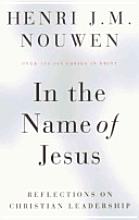
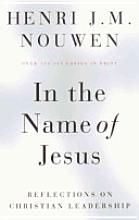
For all Christians who serve and care and get involved in the messiness of other people's lives, we must learn to be great leaders. Not just great leaders, but servant-leaders like Jesus.  Henri Nouwen reflects on this:
After having asked Peter three times, "Do you love me?" Jesus says, "Feed my lambs, look after my sheep, feed my sheep." Having been assured of Peter's love, Jesus gives him the task of ministry. In the context of our culture we might hear this in a very individualistic way as if Peter now was being sent on a heroic mission.

But when Jesus speaks about shepherding, he does not want us to think about a brave, lonely shepherd who takes care of a large flock of obedient sheep. In many ways, he makes it clear that ministry is communal and mutual experience.

First of all, Jesus sends the twelve out in pairs. We keep forgetting that we are being sent out two by two. We cannot bring good news on our own. We are called to proclaim the Gospel together, in community.

I need my brothers and sisters to pray with me, to speak with me about the spiritual task at hand, and to challenge me to stay pure in mind, heart, and body. But far more importantly, it is Jesus who heals, not I; Jesus who speaks words of truth, not I; Jesus who is Lord, not I. This is very clearly made visible when we proclaim the redeeming power of God together.

Ministry is not only a communal experience, it is also a mutual experience. Jesus, speaking about his own shepherding ministry, says, "I am the good shepherd. I know my own and my own know me, just as the Father knows me and I know the Father; and I lay down my life for my sheep." As Jesus ministers, so he wants us to minister.

He wants Peter to feed his sheep and care for them, not as "professionals" who know their clients' problems and take care of them, but as vulnerable brothers and sisters who know and are known, who care and are cared for, who forgive and are being forgiven, who love and are being loved. Somehow we have come to believe that good leadership requires a safe distance from those we are called to lead.

But how can anyone lay down his life for those with whom he is not even allowed to enter into a deep relationship? Laying down your life means making your own faith and doubt, hope and despair, joy and sadness, courage and fear available to others as ways of getting in touch with the Lord of life.

We are not the healers, we are not the reconcilers, we are not the givers of life. We are sinful, broken, vulnerable people who need as much care as anyone we care for. The mystery of ministry is that we have been chosen to make our own limited and very conditional love the gateway for the unlimited and unconditional love of God.

Therefore true ministry must be mutual. When the members of a community of faith cannot truly know and love their shepherd, shepherding quickly becomes a subtle way of exercising power over others and begins to show authoritarian and dictatorial traits. The world in which we live - a world of efficiency and control - has no models to offer to show who wants to be shepherds in the way Jesus was a shepherd.

The leadership about which Jesus speaks is of a radically different kind from the leadership offered by the world. It is a servant leadership in which the leader is a vulnerable servant who needs the people as much as they need him or her.

From this it is clear that a whole new type of leadership is asked for in the Church of tomorrow, a leadership which is not modeled on the power games of the world, but on the servant-leader, Jesus, who came to give his life for the salvation of many.
~In the Name of Jesus, pg39-45

Tuesday, April 5, 2011

Who Can Do It All Alone

Life was not meant to be lived alone. You ought to live such that you have at least one good friend. To have a friend, be a friend. And when it comes to ministry, no one ought to serve and care for others all alone. Christian ministry flows out of a community. While everyone may have different skills and knowledge to contribute, we need each other.

But in our culture, within the church and throughout our society, there is a special place in our hearts for those people that can thrive and achieve something great all by themselves. We have a special admiration for those gifted and talented women and men who can do so much seemingly all alone.
It is a mirage.

The downside of this mirage is that we become disappointed in ourselves when we need someone. We hold it against ourselves if we must lean on another in order to succeed. Thus even our achievements are cheapened because we couldn't do it all alone. We become miserable in our loneliness, as well as in our companionship. Ack!

What is the Christian to do - the one who wants to serve and lift up and listen and heal and be good news? Be in community. Let others into your life. Don't seek to go it alone. Cooperation and collaboration reflect your desire for community and accomplishment. Jesus may have gotten a lot more done all by himself, but he was fully human, and he chose twelve men to spend some years with him. And that was a better way.

Here are some reflections by Henri Nouwen on the temptation to do it all alone - life and ministry:
The second temptation to which Jesus was exposed was precisely the temptation to do something spectacular, something that could win him great applause. "Throw yourself from the parapet of the temple and let the angels catch you and carry you in their arms." But Jesus refused to be a stunt man. He did not come to prove himself.

When you look at today's Church, it is easy to see the prevalence of individualism among ministers and priests. Not too many of us have a vast repertoire of skills to be proud of, but most of us still feel that, if we have anything at all to show, it is something we have to do solo.

You could say that many of us feel like failed tightrope walkers who discovered that we did not have the power to draw thousands of people, that we could not make many conversions, that we did not have the talents to create beautiful liturgies, that we were not as popular with the youth, the young adults, or the elderly as we had hoped, and that we were not able to respond to the needs of our people as we had expected.

But most of us still feel that, ideally, we should have been able to do it all and do it successfully.

Stardom and individual heroism, which are such obvious aspects of our competitive society, are not at all alien to the Church. There too the dominant image is that of the self-made man or woman who can do it all alone.
~In the Name of Jesus, pg39-39

Monday, April 4, 2011

Parish Nurse Notes: Cyber-Bullying

My previous blog dealt with the subject of bullying, its various forms and the signs that it is taking place. In this blog I would like to talk about one of the more insidious forms of bullying, cyberbullying.

As we all know, we live in a world full of technology. Computers, cell phones and so forth are evolving every day as more and more technology boosts our ability to communicate, do business, and have fun. But there is also a very sinister side to all this technology. As always sin crouches at every opportunity to use whatever means possible to do evil.

This year I have been doing some guest teaching at various schools, and grades in the Fort Wayne area. I have been amazed at the technology that kids bring in their pockets every day. One day I inquired at the office of a moderately large school. My question was what to do when I am teaching a class, and I find kids actively using various forms of technology, ie. cell phones and iPods. To my amazement the answer given was “Well if the student using the device isn’t bothering anybody we usually don’t do anything.” I was amazed at the number of kids who were ignoring the lesson at hand, in order to use these devices on a regular basis.

Bullies have also seized upon technology to aid in their misdeeds. Cyber-bullying is a form of bullying does not require the bully to be face to face with his/her victim. This form of bullying has been shown to peak around the end of middle school, and the beginning of high school.

Examples of cyberbullying include but are not limited to:
-sending rude, threatening, and abusive messages via cell phone or computer.
-the use of “social networks” to spread lies, rumors, or other false information.
-using websites to post videos or other social media with the goal of humiliating, and embarrassing others.

This form of bullying is insidious because it can take place at any time of the day or night. It can be spread to many different audiences, and can be spread anonymously.

This problem has major social consequences for its victims. Some problems include skipping school, poor grades, low self esteem, and various physical and mental issues. Students who are victimized have higher rates of alcohol and drug use and are more likely to have face to face interaction with the bully.

One of the best tools we have to help stem this bullying is to listen to our kids. Be proactive and question them if there is any problem either face to face, or through technology.

In conclusion: Cyberbullying is on the rise every day. Its victims may be hesitant to reveal the issue due to embarrassment or fear of retribution.

Visit  this website - it has a lot of helpful information: stopbullying.gov

Keep watching your kids. We cannot depend on school systems, and organizations for kids to keep watch, and deal effectively with this issue. Parents and other family members have the advantage to be the ones who help stem the tide of this growing issue.

Scott G. Eddy, RN BSN

Sunday, April 3, 2011

Connecting to the Community: with Wallace Butts and Carla Castro

For our final 2011 Lenten Gathering, the 46808 Neighborhood Churches met at Anchor Community Church. We had a great array of piping hot, homemade soups and chili! We also had the Fort Wayne Fatherhood Coalition join us, represented by the Coalition Coordinator, Wallace Butts. Carla Castro also shared a bit she is Anchor's Community Connections Director, as well as the coordinator of programs for FWFC hosted by Anchor. She is also the marketing director for FWFC - that's a lot of hats! She wears them well.

Wallace started off our time together with this great video that highlights the joy and dedication of some great dad!


This was followed up by some sad and sobering statistics on what a family can become without a good dad involved in the home. Here's a few to consider:
* 63% of teen suicides come from homes with uninvolved fathers.
 5 times the national average.
* 90% of all runaways and homeless children are from homes with uninvolved fathers.
32 times the national average.
* 85% of children with behavioral problems come from homes with uninvolved fathers.
20 times the national average.

What can neighborhood churches do when they realize that dads in their congregation - and in their community - need help? Help to become a better dad, to become a more involved dad, to be a more confident and caring dad? The Fort Wayne Fatherhood Coalition consists of churches and non-profit organizations committed to providing helpful services to dads. We also connect with other dad-oriented organizations for the sake of collaboration and improved services for the dads we are helping. When dads want to get help, we want to be there for them. And with them.

For more information, check out the FWFC website. You'll see the organizations that consist of the coalition, as well as more details about the services we provide.

It's worth noting where the Fort Wayne Fatherhood Coalition came from. Last year, our 46808 Neighborhood Churches met with Judge Charles Pratt and Kate Rusher to learn more about the court system. We had discovered that many, many families in our neighborhood had some member caught up in the system. How could a church become helpful to a family involved in the court system? That's what we wanted to find out. Find out what we learned!

It was fun meeting with Judge Pratt to prepare for that series. In the weeks leading up to our Lenten series, Judge Pratt approached our churches, along with other congregations and non-profits in the community to pitch the idea of a fatherhood coalition. Indiana Youth Institute had an opportunity for a fatherhood initiative if there were interested organizations. The interest was definitely there! IYI provided great support, some great leaders emerged, and within a few months a coalition had been created.

Almost two-hundred dads were served last year through our coalition. The knowledge that was shared, the skills imparted, the relationships formed, and the homes impacted - its a great reward for the families and the coalition. We owe a debt of gratitude to Judge Pratt for introducing us to the idea, and to Indiana Youth Institute for making the opportunity a reality.

It's amazing what can happen in a year - for dads, for FWFC, for our congregations, for our city.

Thursday, March 31, 2011

Prayer That Keeps You Rooted

What's prayer all about for you? Is it about getting stuff from God? Is it a divine 911 call-line? Is it just one more thing to feel guilty about not doing? Is it a source of skepticism and disappointment?

As a Christian who wants to make a difference for God and for good, you kinda hafta be a praying person. How could you be a Christian leader, a minister of Jesus, a priest who mediates between God and humanity if you don't do much meditation? If you're not talking to God much, how can you help others become rooted in him? If you're not doing much listening to Him, why should anyone do any listening to you?

I get it: you're stuck between the desire to help - you have a caring heart, BUT you're also busy and don't have a lot of time to give to praying, you have a lot on your mind, and you're often tempted to disbelieve that praying makes a big difference. Am I close? Is this you? It's sometimes me.

These words from Henri Nouwen about contemplative prayer and Christian leaders - it's what I needed to hear today:
Christian leaders cannot simply be persons who have well-informed opinions about the burning issues of our time. Their leadership must be rooted in the permanent, intimate relationship with the incarnate Word, Jesus, and they need to find there the source for their words, advice, and guidance.

Through the discipline of contemplative prayer, Christians leaders have to learn to listen again and again to the voice of love and to find there the wisdom and courage to address whatever issue presents itself to them. Dealing with burning issues without being rooted in a deep personal relationship with God easily leads to divisiveness, because before we know it, our sense of self is caught up in our opinion about a given subject.

But when we are securely rooted in personal intimacy with the source of life, it will be possible to remain flexible without being relativistic, convinced without being rigid, willing to confront without being offensive, gentle and forgiving without being soft, and true witnesses without being manipulative.
~ In the Name of Jesus, pg31-32

Most of us are one step away from contemplative prayer. We already worry. We obsess. We go over stuff in our head. We lay awake at night mulling things over, trying to figure out what is going on and what to do next. Contemplative prayer includes God in on what you've got going inside your mind already. You're thinking about something with your kids. Include God in on it. Your marriage is causing confusion. Include God in on it. Work or school is a source of anxiety. Include God in on your swirling thoughts.

Contemplative prayer keeps you rooted in what God is doing already - in you, through you, in others. Direct your deep and constant concerns towards God. He listens to you, and then you...listen...to...him.... To know God is to trust him, to be rooted in him. To lead and love in the name of Jesus is to listen to Him.

Tuesday, March 29, 2011

To Know and To Love

What do you look for in a Christian leader?

As Christianity continues to decline in the West, what ought to be the priority for Christian leaders?

We live in the wealthiest nation EVER! Wealth of information, wealth of opportunity, wealth of stuff. And yet we are one of the most obese, medicated, lonely peoples ever. Within our swirling culture, what is the best contribution a Christian leader can make? As a priest - a mediator between God and humanity - what is our task in these confusing and turbulent days?

Henri Nouwen has this to say about the Christian leader of the future:
The Christian leader of the future is the one who truly knows the heart of God as it has become flesh, "a heart of flesh," in Jesus.

Knowing God's heart means consistently, radically, and very concretely to announce and reveal that God is love and only love, and that every time fear, isolation, or despair begin to invade the human soul this is not something that comes from God.

Knowing the heart of Jesus and loving him are the same thing. The knowledge of Jesus' heart is a knowledge of the heart. And when we live in the world with that knowledge, we cannot do other than bring healing, reconciliation, new life and hope wherever we go.

The desire to be relevant and successful will gradually disappear, and our only desire will be to say with our whole being to our brothers and sisters of the human race, "You are loved. There is no reason to be afraid."
~In the Name of Jesus, pg 25, 27

If you want to make a difference in your own home, if you want to expand your heart, you are invited to know Jesus. You must step forward and lead your self, your family, your friends into a new place of hope and healing. You must become a leader by actually leading - taking initiative, planning ahead, bringing others along with you, implementing change. Your home needs you to be a leader. Your church needs it. Your work needs it. Your school needs it. You need it.

To know Jesus - his words, his works, his way - is to know his loyalty to you, his faithfulness, his devotion and sacrifice and trustworthiness. He is to us what he wants us to be to others. To let him lead you is how you are able to lead others. This may be a new definition of leadership for you. In light of how things are going, I'd say we probably need a new kind of leader for the future. A different kind of Christian for tomorrow. One through whom others know and love Jesus.

In Our World of Loneliness and Despair

As Christians who care, we work to bring hope and help to a situation. We minister as priests, mediators between God and humanity - for God is the one who fuels hope and sustains real help. When we bring hope and help to our neighbor, we let it come from Him through us. As little Christ's, we follow in the way of Jesus, meeting others in their hard times with a heart of love, a heart that knows God.

Henri Nouwen writes at length about Jesus and our hearts and hope:
Look at Jesus. The world did not pay any attention to him. He was crucified and put away. His message of love was rejected by a world in search of power, efficiency, and control.

But there he was, appearing with wounds in his glorified body to a few friends who had eyes to see, ears to hear, and hearts to understand. This rejected, unknown, wounded Jesus simply asked, "Do you love me, do you really love me?" He whose only concern had been to announce the unconditional love of God had only one question to ask, "Do you love me?"

The question is not: How many people take you seriously? How much are you going to accomplish? Can you show some results? But: Are you in love with Jesus? Perhaps another way of putting the question would be: Do you know the incarnate God?

In our world of loneliness and despair, there is an enormous need for men and women who know the heart of God, a heart that forgives, that cares, that reaches out and wants to heal. In that heart there is no suspicion, no vindictiveness, no resentment, and not a tinge of hatred. It is a heart that wants only to give love and receive love in response.

It is a heart that suffers immensely because it sees the magnitude of human pain and the great resistance to trusting the heart of God who wants to offer consolation and hope.


Are you in need of hope?

Are you in need of help?

When you reach out to God, he responds in love - he can identify with your loneliness and despair. He meets you where you are at. The greatest difficulty in asking God for help is that you must trust Him, trust His way of helping. If He prompts you to forgive, you must trust Him to forgive. If He moves you to stay loyal, you must trust Him and do so. If He brings someone into your life that offers wisdom and companionship for the long journey, you'll need to trust Him on it and go along.

God will answer your prayers for hope and help by bringing someone alongside you with a heart that knows the heart of God and can be a conduit for his healing love. You must be be willing to receive the answer to your prayers.

And for you, Christian, that cares: are you willing to be part of God's answer to those who whisper "Help..."

Sunday, March 27, 2011

Connecting to the Community: with Jocelyn Smith

For our third Lenten gathering, the 46808 Neighborhood Churches met at Trinity United Methodist Church with Jocelyn Smith of Rising Stars, a ministry of Associated Churches of Fort Wayne and Allen County. Jocelyn is the Community Connector for our neighborhood, and works with four local elementary schools: Washington, Nebraska, Bloomingdale, and Franke Park. Jocelyn was joined by the Rising Stars Director, Sarah Adams.

Together the two of them presented to the gathered churches the origins of Rising Stars, the difference it is currently making in the community, and what is next. It was great to have Grace Presbyterian, First Mennonite, Anchor Community, United Faith Presbyterian, and members from Trinity United Methodist come together to strengthen our partnership with Rising Stars and as members of the Associated Churches.

Rising Stars is doing great work in our local elementary schools - and providing a great opportunity for collaboration with neighborhood churches. Community Connectors like Jocelyn Smith build relationships with schools and churches, becoming a link for support and fulfilling needs. Schools always needs supplies for their students, and sometimes they need help with clothing and other essentials. But the biggest need that has surfaced is support for the parents - training opportunities that improve parenting skills, strengthen families, and nurture a better performing school.

Recently, in partnership with Youth Services Bureau and the Fort Wayne Fatherhood Coalition, Rising Stars was able to start parenting classes in a number of local elementary schools, including Nebraska Elementary School, which is ten blocks south of Anchor. These STEP classes are taught by facilitators trained through YSB and funded by Fort Wayne Fatherhood Coalition. Rising Stars then works with local churches like Anchor and Trinity, to help pay for food costs, provide volunteers and help with incentives. Parents are getting help, the Aha! moments are happening - this is neighborhood collaboration at its best! 

Sarah Adams shared some compelling stories:
*A Bloomingdale student came to school irregularly - she had to share her wintercoat with a sibling. When news reached the school, Rising Stars stepped in to provide a coat so that both students could go to school everyday wearing their own warm winter coats.
*At a different school, a family had split up - and then all their possessions were destroyed in a fire. Through the school, Rising Stars was able to provide gift cards to help them recover. The family got the help they needed, they have come back together, are in a different home, part of a local church, and have started a new life together.
*A principal shared that different teachers said they could feel the presence of God in their classrooms. The love and support they get from Rising Stars is like a big huge hug!

Churches can do more together. God does some of his best work through congregations that collaborate in their city to serve and love in the name of Jesus. To learn more about how you can get involved and make a difference for good, check out these links below:

Associated Churches of Fort Wayne and Allen County

Rising Stars Ministry

Nebraska Elementary School


Fort Wayne Fatherhood Coalition

Youth Services Bureau


Trinity United Methodist Church

Grace Presbyterian Church

Anchor Community Church


Also: NeighborLink Fort Wayne

Wednesday, March 23, 2011

Irrelevant and Truly Self-Confident

What's at the heart of Christian ministry? If you are a Christian, and you do any kind of serving, caring, helping, praying, etc, you are doing ministry. That makes you a Christian minister. A little Christ ministering in the way of Jesus. What is central to ministering in the name of Christ?

Henri Nouwen puts it like this:
Before Jesus commissioned Peter to be a shepherd he asked him, "Simon, son of John, do you love me more than these others do?" He asked him again, "Do you love me?" And a third time he asked, "Do you love me?"

We have to hear that question as being central to all of our Christian ministry because it is the question that can allow us to be, at the same time, irrelevant and truly self-confident.
~In the Name of Jesus, p23

To be irrelevant is to be free. Free from unrealistic expectations. Free from legalistic burdens. To be irrelevant is to be free to be led by the Spirit of God. And to be self-confident - most of us can only dream of becoming such. To be self-confident in our serving, in our caring, in our helping, in our listening, in our correcting, in our mentoring, in our loving...such is the way of Jesus.

Let Jesus ask you the question he put to Peter. Listen to the probing interrogation. He is looking into your eyes - that strong, steady, gentle, intense gaze: Do. You. Love. Me?

Tuesday, March 22, 2011

A Deep Current of Despair

When you are out in public, do you ever people-watch? You may already know that body-language makes up about 80% of personal communication. You can tell a lot about a person by how they walk, how they stand and lean and slouch and shuffle. Not everything, but a lot. Behind the make-up, behind the clothes, behind the attitude, what do you see?

As someone who cares, as a Christian who ministers, as a priest who mediates between God and humanity, what do you do with what is really going on inside others? Do you realize what is churning inside of so many of us?

Henri Nouwen has these penetrating insights into the reality of those who minister and those we see:
In this climate of secularization, Christian leaders feel less and less relevant and more and more marginal. Many begin to wonder why they should stay in the ministry. Often they leave, develop a new competency, and join their contemporaries in their attempts to make relevant contributions to a better world.

But there is a completely different story to tell. Beneath all the great accomplishments of our time there is a deep current of despair. While efficiency and control are the great aspirations of our society, the loneliness, isolation, lack of friendship and intimacy, broken relationships, boredom, feelings of emptiness and depression, and a deep sense of uselessness fill the hearts of millions of people in our success-oriented world.

And the cry that arises...is: Is there anybody who loves me; is there anybody who really cares? Is there anybody who wants to stay home for me? Is there anybody who wants to be with me when I am not in control, when I feel like crying? Is there anybody who can hold me and give me a sense of belonging?

Feeling irrelevant is a much more general experience than we might think when we look at our seemingly self-confident society. Medical technology and the tragic increase in abortions may radically diminish the number of mentally handicapped people in our society, but it is already becoming apparent that more and more people are suffering from profound moral and spiritual handicaps without having any idea of where to look for healing.

It is here that the need for a new Christian leadership becomes clear. The leader of the future will be the one who dares to claim his irrelevance in the contemporary world as a divine vocation that allows him or her to enter into deep solidarity with the anguish underlying all the glitter of success and to bring the light of Jesus there.
~In the Name of Jesus, p20-23

Does that resonate with you?

The new Christian leader will enter into deep solidarity with those caught up in the deep current of despair - and bring the light of Jesus there.

To the despairing: may enough Christians hear your cry and see your eyes and enter into solidarity with you, bringing the light of Jesus to you.

Monday, March 21, 2011

Parish Nurse Notes: Bullying

Anchor Community has been collaborating with 46808 Neighborhood Churches with the purpose of helping build a stronger, responsible, and healthier neighborhood. There are many subjects and issues that can be addressed. Among those issues are raising great teens who will grow up one day to be responsible citizens in our own neighborhoods and towns.

One issue has come to the forefront for almost all teens in one way or another: bullying. In recent research 43,321 teens were surveyed. The age range was 15-18 in 78 different public schools, and 22 private schools. Amazingly, a full 24% reported that they feared going to school, and found school to be an unhappy, and unsafe place to be. It was also found that 37% of boys and 19% of girls felt violence in schools was okay.

In other research, it has been found that as many as 100,000 students have gone to school while carrying firearms. 77% of students in one research group admitted to being bullied at some point. It is estimated that as many as half the incidents of bullying are never reported…..even considering that as many as 14% of students have had severe negative events related to bullying.

One big problem with bullying in 2011 is that it is no longer limited to just verbal threats and physical violence. Bullying has many faces including:
-relational...ie. withdrawing emotional, social, and friendship benefits to punish a victim
-racial...indirect racial slurs, graffiti, exclusion from various social settings and activities, and harassment
-sexual...sexual remarks, inappropriate touching,
-cyberbullying...threats and harassment over various internet social sites such as Facebook etc.

Very serious problems can result for bullied teens including physical harm as well as depression and social isolation. In the next couple of blogs I will discuss more in depth the problems related to bullying….and some of the steps we can take both in the Church, and in the community to help stem the epidemic which is overtaking so many of our teens.

Scott G. Eddy, RN BSN


Reference: USA Live Headlines.Com

They Are Very Busy

We've been making the contention that every Christian is a priest. Our role of mediation between God and humanity takes the form of ministry. Through our actions, our works, our deeds we reveal the mercy and will of God in the world, we become the answers to the prayers of the people. In our everyday life at work and home and school and church, while shopping and dining and playing and strolling, with the people we come across in our day - this is also where we mediate and minister.

Do you ever wonder if you are ever really making a difference? Are there moments that make you think that all your help and ministering is for naught? Whether you get paid to be a minister or you volunteer - you've probably faced those moments of self-doubt: does my ministry matter? Should I continue?

Henri Nouwen has been in that place, and here's what he writes about it:
One of the main sufferings experienced in the ministry is that of low self-esteem. Many priests and ministers today increasingly perceive themselves as having very little impact. They are very busy, but they do not see much change.

It seems that their efforts are fruitless. They face an ongoing decrease in church attendance and discover that psychologists, psychotherapists, marriage counselors, and doctors are often more trusted than they. Meanwhile, there is little praise and much criticism in the Church today, and who can live for long in such a climate without slipping into some type of depression?

The secular world around us is saying in a loud voice, "We can take care of ourselves. We do not need God, the Church, or a priest. We are in control. And if we are not, then we have to work harder to get in control. The problem is not lack of faith, but lack of competence."
~In the Name of Jesus, p19-20

It's ironic: the people who need help, well part of their problem is that they are very busy; and the people who want to help, well they are very busy helping. We are all very busy! Who is the man, who is the woman who will step out in faith and refuse to be busy? It would take great imagination to conceive of a life that is not dominated by being busy - and it would require you to not be busy. What to do?

If you want to really help someone, you must trust God to guide your steps - He will not cause you to be too busy. If you want help - if you really want God's help - you must trust him to slow down your steps so that you are not so busy.
You can't do reflection and repentance on the run.
You can't change your heart if you're too busy to cook a meal at home with your family. 

Reading the Gospels, one never gets the sense that Jesus was busy. He worked hard, he suffered, he applied himself diligently, but he wasn't busy. To serve in the name of Jesus does not require you to be busy. 

To receive the help of Jesus will require you to slow down - this sometimes looks like the wheels falling off of your life. Consider it a blessing. Incompetence is not necessarily your problem, rather it's your unwillingness to trust God's way. Your way makes you too busy and impotent. You can find a new way.

Anchor Google Map & Picture

Anchor Community Church's Fan Box