Monday, March 21, 2011

They Are Very Busy

We've been making the contention that every Christian is a priest. Our role of mediation between God and humanity takes the form of ministry. Through our actions, our works, our deeds we reveal the mercy and will of God in the world, we become the answers to the prayers of the people. In our everyday life at work and home and school and church, while shopping and dining and playing and strolling, with the people we come across in our day - this is also where we mediate and minister.

Do you ever wonder if you are ever really making a difference? Are there moments that make you think that all your help and ministering is for naught? Whether you get paid to be a minister or you volunteer - you've probably faced those moments of self-doubt: does my ministry matter? Should I continue?

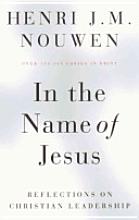
Henri Nouwen has been in that place, and here's what he writes about it:
One of the main sufferings experienced in the ministry is that of low self-esteem. Many priests and ministers today increasingly perceive themselves as having very little impact. They are very busy, but they do not see much change.

It seems that their efforts are fruitless. They face an ongoing decrease in church attendance and discover that psychologists, psychotherapists, marriage counselors, and doctors are often more trusted than they. Meanwhile, there is little praise and much criticism in the Church today, and who can live for long in such a climate without slipping into some type of depression?

The secular world around us is saying in a loud voice, "We can take care of ourselves. We do not need God, the Church, or a priest. We are in control. And if we are not, then we have to work harder to get in control. The problem is not lack of faith, but lack of competence."
~In the Name of Jesus, p19-20

It's ironic: the people who need help, well part of their problem is that they are very busy; and the people who want to help, well they are very busy helping. We are all very busy! Who is the man, who is the woman who will step out in faith and refuse to be busy? It would take great imagination to conceive of a life that is not dominated by being busy - and it would require you to not be busy. What to do?

If you want to really help someone, you must trust God to guide your steps - He will not cause you to be too busy. If you want help - if you really want God's help - you must trust him to slow down your steps so that you are not so busy.
You can't do reflection and repentance on the run.
You can't change your heart if you're too busy to cook a meal at home with your family. 

Reading the Gospels, one never gets the sense that Jesus was busy. He worked hard, he suffered, he applied himself diligently, but he wasn't busy. To serve in the name of Jesus does not require you to be busy. 

To receive the help of Jesus will require you to slow down - this sometimes looks like the wheels falling off of your life. Consider it a blessing. Incompetence is not necessarily your problem, rather it's your unwillingness to trust God's way. Your way makes you too busy and impotent. You can find a new way.

Sunday, March 20, 2011

Connecting to the Community: with Megan Kelly

Tonight we met at Grace Presbyterian Church with Megan Kelly of Great KIDS make Great COMMUNITIES. Megan presented an overview of the 40 Developmental Assets, particularly those that congregations can build into kids and youth. It was a lot of good information, a very empowering session. Our 46808 Neighborhood Churches want to make our neighborhood a better place to live - and building assets into children and teens is a key investment.

Here's some highlights from the evening:
* the average American kid has about 19 assets in their life
* kids and youth who are involved in their local church have on average about 21 assets in their life
* kids and youth who are not involved in a local church have on average about 15 assets in their life
* while the ideal goal is for each child and teen to have all forty developmental assets in their life, having at least 30 will make a big difference in their life
* churches can make a key difference in the life of a child and teen directly, and indirectly through supporting parents and other local agencies.

The 40 Developmental Assets are a result of research done by the Search Institute. You can read about all the assets by clicking here. Search Institute has identified these building blocks of healthy development - known as Developmental Assets - that help young people grow up healthy, caring, and responsible. The research shows that the more positive experiences children have in their lives, the greater the likelihood that they will succeed developmentally.


What are the developmental assets that congregations can naturally build into young people?
*provide support through other adult relationships: young people need to receive support from three or more nonparent adults
*empowerment through fostering a place of safety: young people need to feel safe at home, school, and in the neighborhood
*availability of adult role models: young people need parents and other adults to model positive, responsible behavior

*nurture a constructive use of time through involvement in a religious community: young people ought to spend at least one or more hours per week in activities with a religious institution
*demonstrate positive values like caring and helping others, equality and justice for others in need, integrity with convictions, honesty when it's not easy, accepting responsibility, and showing restraint towards unhealthy behaviors
* foster a sense of purpose: young people need to feel like their life has a meaningful purpose

For a great list of specific activities of what congregations can do to build into kids and youth, click here.


In what ways has Anchor been building assets into the life of our children and teens over the past bunch of years? Here's some observations. What would you add to the list?
* serve on the worship team as singers, Scripture readers, and instrumentalists
* serve as candlelighters, ushers, and communion servers
* serve on community service projects in the neighborhood

* raise their own funds for youth trips and projects
* raise funds for people in need - in our community and around the world
* participate in small groups led by caring, fun, responsible adults
* enjoy a safe place to spend their morning singing, learning, and praying
* worship and serve alongside adults ranging from young to old

Wednesday, March 16, 2011

Temptation To Be Relevant

So you find yourself caring. You care about the people in your life. You care about your community. You care about the burning issues of your day. You care about victims of earthquakes and political revolutions. Like Jesus, you care.

Henri Nouwen thinks that Jesus' first temptation was to be relevant. It's a temptation that almost every pastor faces, every Christian who cares about their church and family members and neighbor faces. Here's what Nouwen writes:
Are we not called to do something that makes people realize that we do make a difference in their lives? Aren't we called to heal the sick, feed the hungry, and alleviate the suffering of the poor?

Jesus was faced with these same questions, but when he was asked to prove his power as the Son of God by the relevant behavior of changing stones to bread, he clung to his mission to proclaim the word and said, "Human beings live not by bread alone, but by every word that comes form the mouth of God."
~In the Name of Jesus, p18-19

It's worth reflecting on why Jesus refused the devil's offer. Maybe it's a simple answer: always reject what the devil offers! But the opposite would be: always accept what God offers. Which is exactly what Jesus ends up saying. It sounds so easy! But the devil knows how to offer an alternative way that comes across as very appealing. Very appealing. And convenient. And helpful. Relevant.

Why do you want to help people? When it comes to caring for people, how much of it is about you? When you reach out to someone, do you ever let God prompt you forward? Does the way of Jesus determine your course of action, or do you let yourself get driven by your own desires for compassion?

There is no substitute for knowing God's word to his people. If you are a Christian, and you don't ever let God's word direct your steps of help and compassion, you may find yourself merely turning stones to bread. You maybe be popular and helpful, but you aren't connecting people to the God who saves and rescues and heals. The temptation to be relevant is powerful, it is hard to resist.

Tuesday, March 15, 2011

Called To Be Completely Irrelevant

What makes for a good Christian leader? What are the qualities you look for?

How would you know if you were a good Christian leader?

Here's what Henri Nouwen has to say about it:
...I am deeply convinced that the Christian leader of the future is called to be completely irrelevant and to stand in this world with nothing to offer but his or her own vulnerable self. That is the way Jesus came to reveal God's love.

The great message that we have to carry, as ministers of God's word and followers of Jesus, is that God loves us not because of what we do or accomplish, but because God has created and redeemed us in love and has chosen us to proclaim that love as the true source of human life.

How do these thoughts alter your perspective of what makes for a good Christian leader?

Too often we feel like we must choose between an effective leader and a loving leader. A leader needs to be effective, but a Christian leader must also be one who loves in the name of Jesus. Without love, that leader is like a annoying, clanging cymbal. 

Your willingness to offer your vulnerable self to God and your neighbor, in the name of Jesus, positions you for Christian leadership. Your ability to express the way God loves you - not in superspiritual lingo, not with big Christianese phrases - enables you to minister to others. This is Christian leadership at its core - leading people and organizations and communities into a way of life of loving your neighbor as God loves you.

The temptation is to skimp on love. The temptation is to continually think of yourself as a loving person. The temptation is to believe in the power of love without being a conduit for the power of love. As a Christian you have nothing to offer but your own vulnerable self, loved by God.

To some this is the way of irrelevance. But it is the way of Jesus.

Monday, March 14, 2011

Does Becoming Older Bring Me Closer to Jesus?


Becoming older can merely make us cynical or stiff-necked. But it can also make us wiser and sweeter. When it comes to knowing Jesus, the experiences that come from getting older can draw us closer to him, or push us further away. That temptation never ceases.

For Henri Nouwen, he puts it like this:
Did becoming older bring me closer to Jesus? After twenty-five years in the priesthood, I found myself praying poorly, living somewhat isolated from other people, and very much preoccupied with burning issues. Everyone was saying that I was doing really well, but something inside me was telling me that my success was putting my own soul in danger.

I began to ask myself whether my lack of contemplative prayer, my loneliness, and my constantly changing involvement in what seemed most urgent were signs that the Spirit was gradually being suppressed. It was very hard for me to see clearly, and though I never spoke about hell or only jokingly so, I woke up one day with the realization that I was living in a very dark place and that the term "burnout" was a convenient psychological translation for a spiritual death.

In the midst of this, I kept praying, "Lord, show me where you want me to go and I will follow you, but please be clear and unambiguous about it!" Well God was.

As a Christian, you may not think of yourself as a priest, but you are. If you are trying to help your friends or family get to know God better, you are doing the work of a priest. If you care about the faith of others, you have the heart of a priest. And every Christian who cares and takes initiative and gets involved at some point faces burnout. We suppress the Spirit. This also is a temptation that never ceases.

Does your current way of life make contemplative prayer unrealistic? Are you surrounded by people, yet still feeling disconnected and lonely? Do you find yourself caring about burning issues in the lives of people around you, yet you find yourself filled with low-grade despair about people and their possibility of changing? Is getting older as a Christian resulting in you becoming closer to Jesus?

So what is it about becoming older as a Christian that helps me become close to Jesus? The temptation is to dismiss the question. Or to answer it too quickly, too hastily. The following blogposts will address these issues, using Scripture texts from Jesus in the Wilderness, and Jesus' to Peter to become a Shepherd.

Sunday, March 13, 2011

Connecting to the Community: With Judge Pratt

Churches in the 46808 Neighborhood gathered together tonight at First Mennonite Church to meet with Judge Charles Pratt. He was joined by his assistant Kate Rusher, the Assistant Chief Juvenile Probation Officer at Allen Superior Court.

Here's an overview of some of the material Judge Pratt shared with us in regard to reporting child abuse and neglect:
First: is the child under the age of 18?
Second: which of these in the "general neglect category" apply -
* Food
* Clothing
* Shelter
* Supervision
* Medical Care
* Education

Third: Does the neglect have a corresponding serious harm to the child?
Fourth: Has your congregation's offer to help or help from other agencies been ignored or refused?
Fifth: Has there been an act - or a failure to act - that resulted in injury (an injury that is not typical given the age, the place of the injury, and the extent of it)?
Sixth: Has there been injuries from an act of domestic violence (or has the child been exposed to domestic violence)?

When reporting, be sure to:
* Give specific conditions of the home if you deem it to be unsafe
* Articulate clearly the circumstances that you deem to of serious harm (untreated medical care, failure to provide food, inadequate shelter, children left alone, etc.)
* Call the child abuse and neglect hotline as soon as you have compiled your information: 1-800-800-5556. If you think the child is in immediate danger, call your local police.

Possible victims of sex offenses:
If the child provides you with facts that he or she has been sexually victimized, then do the following:
* Make notes for your later recollection about the child's comments.
* Do not ask the child questions. There is protocol for interviewing the children that requires an expert to complete
* Contact the police and the hotline.
* Assure the child that you are acting to protect him or her.
* Remember that the child - regardless of his or her participation in the abuse - is a victim.


As our churches become more involved in the neighborhood, and as we come alongside more families, we are seeing more children in dire circumstances. The question arises: what's the best way to serve the children and their families? And: how can we best partner with the court system to better serve those involved in abuse and neglect cases? This is how we subvert the powers of injustice.

Jesus commanded his disciples to go preach the kingdom of God and heal the sick. This is motivation for us to meet with Judge Pratt and collaborate with him in better caring for our neighbors. We are a community of churches that want to make our neighborhood a better place to live, in the name of Jesus.

We met with Judge Pratt and Kate Rusher last year - over a period of four weeks they introduced us to the court system from the perspective of children, youth, and adults. They also helped us connect with available resources like Great Communities Make Great Kids, the YWCA: Domestic Violence Services, CASA: Court Appointed Special Advocates for Children, and others.

This year we wanted to follow up with Judge Pratt and Kate Rusher and learn more about CHINS (Children In Need of Services). Next week we will meet with Megan Kelly who directs Great Communities Make Great Kids - and will do a presentation on the 40 Developmental Assets that church communities can best offer to kids and youth. The following week we'll meet with Jocelyn Smith of Rising Stars, and then the final week we'll meet with Wallace Butts of the Fort Wayne Fatherhood Coalition.

Saturday, March 12, 2011

God is a God of the Present

You are a Christian. You are a priest. You are a leader. You face temptations.

Henri Nouwen was in this category as well, and he was asked to speak about Christian leadership in the twenty-first century. He writes this:
But after having said "Yes" to the invitation, I realized that it was far from easy to come up with a sane perspective on Christian leadership in the coming century.

I wondered how it would be possible to look ahead of me, when I considered that nobody in the fifties could have forseen the situation of most priests [and Christian leaders] today.

I came to see that I should not worry about tomorrow, next week, next year, or the next century. The more willing I was to look honestly at what I was thinking and saying and doing now, the more easily I would come in touch with the movement of God's Spirit in me, leading me to the future.

God is a God of the present and reveals to those who are willing to listen carefully to the moment in which they live the steps they are to take toward the future. "Do not worry about tomorrow," Jesus says, "tomorrow will take care of itself. Each day has enough trouble of its own." (Matthew 6:34).

You may not feel like you are a priest, or a leader, or a very good Christian, but you are quite aware of your temptations. Your way out of your temptations will be how you blossom as a Christian, become a helpful leader, and a caring priest. You may just want delivered from your temptations without all the leadership and priest stuff. I'm not sure that's the way it works.

God is still God in your present circumstances - no matter how confusing or disappointing or fulfilling. No matter how you perceive your situation, there is still the desperate need to listen carefully to Him about your next steps into the future. Your temptations can be an ongoing burden to you, or, when you get in touch with God's Spirit, they can be the gateway to a new day. Welcome to the way of becoming a Christian priest and leader.


Friday, March 11, 2011

Your Temptations & Tomorrow

If you are a Christian, you are a priest.
But you are a chosen people, a royal priesthood, a holy nation, God’s special possession, that you may declare the praises of him who called you out of darkness into his wonderful light. Once you were not a people, but now you are the people of God; once you had not received mercy, but now you have received mercy. [1Peter 2v9-10]

You may not ever think of yourself as a priest, you may not be able to point out actions in your life that reveal you to be a priest, but that doesn't make the identity less true.

As a priest, you face temptations. One of those temptations is too see yourself as disqualified for priesthood, or deny that you are in fact part of a royal priesthood. The temptation may be to see yourself as unusable, as part of a useless community.

A priest is one who mediates between your neighbor and God. When you pray for someone, you are doing the work of a priest. When you listen to someone talk about God, you are being a priest to them. When you help someone forgive, when you help someone understand the Scriptures, when you guide people into truth and grace as taught us by Jesus, you are being a priest. When you love your neighbor as a way to love God, you are being a priest. To be a Christian is to be a priest.

Priests face deadly temptations. Peter the Apostle writes with this reality in mind:
Dear friends, I urge you, as foreigners and exiles, to abstain from sinful desires, which wage war against your soul. Live such good lives among the pagans that, though they accuse you of doing wrong, they may see your good deeds and glorify God on the day he visits us. [1Peter 2v11-12]
Not only is a priest a mediator between God and man, and not only does a priest face deadly temptations, but a priest is also a leader. This is a self-evident point, but it is too often overlooked. A priest who wrote true and helpful words about priesthood and leadership, Henri Nouwen, has some keen observations on Christian leadership in our century.

By reading his writings for Lent, my hope is that you will more fully embrace your identity as a priest, that you will find courage and wisdom to overcome temptations, and a vision for what your life as a leader can look like for others.

Anchor needs you to be a priest who embraces the task of leadership. Tomorrow needs you to accept your tasks today. Your friends need this, your family needs this, you need to do this. Temptations will never cease, and thus there is always the need for priests to help others overcome and recover. You need a priest to help you, and others need you to be the priest to help them. To be the Anchor is to be the priest to your neighbor.

You may find all this talk about being a priest rather odd, uncomfortable, or heretical.

May you not be so turned off or tuned out that you miss an opportunity to stretch your understanding of your life in Christ. It could be that your view of the world is too small. Your Jesus may be too small. Your perspective of who you are in Christ may be too small. The temptation may be to avoid obedience tomorrow by keeping your faith small today.

Thursday, March 10, 2011

How'd Your Second Day of Lent Go?

What did you give up for Lent?

How's it going on your second day? 

I've already failed. At a meeting for pastors, no less!

I worked hard all day to avoid snacking on dessert stuff. And then I went to the Associated Churches Meet -n- Greet tonight and mindlessly grabbed two oatmeal raisin cookies. Ack! I didn't even think about what I did until I got home later that night. So tomorrow is a new day. And a birthday party! Oh my... what will I do?


Oh well. I'm at the beginning of an adventure. I only fail if I quit. And I'm not going to quit. So I guess I didn't fail...

I'm reminded of the kind of intentionality it takes to make a change. It's hard to keep with a commitment. Others might think it trivial what you give up for Lent. But don't underestimate the good of denying yourself. Whether it's desserts or pop or chocolate or meat or beer or smokes or porn or hate - whatever it is you decided to give up for Lent - the act of giving something up that you are attached too... this is good for you. Small or significant, putting the energy into different forms of fasting builds spiritual strength. 

You probably need more spiritual strength. Lent is a good season for testing yourself in the area of self-denial. Not in a spirit of legalism, but in spiritual development and reflection. You need to let go of some unnecessary things in order to receive what you need. 

So even if you're already struggling with your Lenten commitment, don't give up. The struggle is good for you. Don't quit. Yet. Let the struggle and the faltering prompt you to pray and reflect and try again. And again. Forty days can make a difference in your life.

You can do it.

Wednesday, March 9, 2011

A Prayer for Ash Wednesday

If you were going to spend the day praying, here are a few suggestions:

* Focus on praying at some point in the morning, mid-afternoon, and in the evening. You can either set a specific time, or just be mindful of a general time frame.

* Instead of praying "made-up-spontaneous-prayers" (which have their place), I'm suggesting you pray this scripted prayer, a modified version of the Lord's Prayer and the Great Commandment. When the disciples asked Jesus about how to pray, this is what he taught us.

* When you do pray, repeat the prayer several times - a form of meditation. As you do this, focus on a phrase, on a word that seems to lodge in your head and heart. The repetition lets the prayer settle deeper within you, sparks reflection and imagination.

* This isn't a legalistic religious task, but a spiritual formation opportunity. We are spiritual beings, and specific kinds of prayers and reflection open us up to the Way of Jesus and the direction of God's Spirit. 

Here is a suggested prayer for Ash Wednesday:
Our Father in Heaven,
Holy is your name.
Your kingdom come,
Your will be done:
To love the Lord our God
With all our heart, soul, mind and strength;
And to love our neighbor as we love ourselves.
Give us today our daily bread.
Forgive us our sins,
For we also forgive everyone who sins against us.
And lead us not into temptation,
But deliver us from evil.

Amen.

Tuesday, March 8, 2011

Fat Tuesday and Ash Wednesday

Tomorrow is Fat Tuesday.
The following day is Ash Wednesday, the first day of Lent.

Fat Tuesday is a fun day of celebration, preparation for the solemn day of Ash Wednesday. It's famously known by it's French name, Mardi Gras. It's also known in England as Pancake Tuesday. Feasting on extra rich pancakes with lots of fun toppings, with family and friends, knowing you'll be hungry the next day.

If you are willing, I invite you to make Ash Wednesday a day of prayer and reflection. You can do this by fasting – either skipping all meals for the day, or at least one.

When you fast, you typically still drink water – depending on your health, you may need to eat a fruit or small piece of wheat bread.

The hunger that comes from fasting is both a reminder of our Lord’s days in the Wilderness, but is also a reminder to pray and reflect on our appetites, on our desires, on our life with God.

If you were going to make Ash Wednesday a special day of prayer and reflection, a suggestion would be to center it around the Lord’s Prayer. You could keep it simple and pray it three times: morning, noon, and night. Another option would be to pray it every hour.

Or, to pray it throughout the day whenever the Spirit prompts you. Or a combo of those three options. The point is that you are slowly working your way through the prayer Jesus taught us – letting the words and ideas sink into your heart, letting them shape your words to God.

When praying the Lord’s Prayer, you may find that different phrases impact you at different points of the day, depending on how the day is going. You may find that you don’t quite understand what Jesus is asking you to pray, which will prompt good reflection. Or it may be convicting. You may also find yourself repeating the prayer over and over and over again. I often pray this prayer when I don’t know what else to pray – I let Jesus' prayer give me the words for the concerns I carry within me.

On Ash Wednesday, not only is it a day of reflection on the Lord’s Prayer, but it can also be a day of giving up something for Lent. Whether it is a particular food or drink, it can also be an addiction or bad habit, something on your schedule or some leisure activity, whatever you pick, it’s something that you’ll miss. It’s a form of fasting you start on Ash Wednesday, but continue over the whole Lenten Season.

Lent begins on Ash Wednesday and ends on Holy Saturday, the next day being Easter Sunday. May your season of prayer and fasting provide the Resurrected Lord with opportunities to dig around in your soul and mind, may He plant new seeds of hope in you as you make room for Him and His words.

Tuesday, March 1, 2011

Parish Nurse Notes: MRSA

My name is Scott Eddy and I am the Parish Nurse for Anchor. I am very much looking forward to this ministry. Some of the folks at Anchor have come to know me, but for those of you who have not, I would like to take this opportunity to introduce myself.

I have been an RN for 25 years now, over half my life. I have worked mostly in the hospital setting. I have worked in many areas including critical care, cardiac, neonatal intensive care, pediatrics, psychiatry, and surgical. I first received my RN after graduating from the Lutheran Hospital School of Nursing. Later I received a Bachelor’s degree from Indiana Wesleyan University.

I am the father of 2 great kids…both teenagers. I was born in 1964, and at that time my parents attended Third Street United Brethren Church. We were at Third Street until I was 8 years old. Just before leaving Third Street, I gave my heart to the Lord, with the help of a very dear Sunday School teacher named Juanita Sivits. Coming to Anchor (which used to be the Third Street UB Church) was like coming home, and I know this is where the Lord wants me to be.

As a Parish Nurse for Anchor, one of the ways I will serve is by blogging on various health care concerns. Some of my blogposts will feature informative subjects. Some will feature information that is geared toward prevention, some toward treatment issues. If at any time someone at Anchor would like me to discuss a certain topic, please feel free to mention that to me.

One topic that comes up repeatedly these days is MRSA. This is the acronym for Methicillin-resistant Staphylococcus aureus - MRSA. A very big name to be sure. Many stories have been told about this organism which have left the public with a high degree of anxiety.

The basic form of MRSA is just called Staph aureus. This part of the organism usually resides on the skin and sometime the nasal passages of a healthy individual. MRSA is a special strain of S. aureus that responds poorly to many of our most powerful antibiotics. MRSA can be an easily dealt with problem if it is for example just on the skin and it is diagnosed and treated early. MRSA can become a serious problem if it gets into the blood, heart, bone, etc. An important concept is not to immediately allow anxiety to rule the day if a physician tells you that you have MRSA.

There are two types of MRSA. One type is acquired in the hospital. MRSA is very hard to get rid of. If you have been in the hospital, or had surgery in the last year you are at increased risk for MRSA infection. Again, allow common sense and early treatment to rule the day. The other type of MRSA is acquired in the community. This is becoming more of a problem to deal with. Some of the people at risk include athletes who share equipment, children in daycare facilities, persons in the military, and those who get tattoos.

Symptoms of skin infection may include drainage of pus or other fluid from the site, fever, warmth around the infected area. Watching for fever is an excellent way to watch for MRSA. Fever is one of our most basic indicators of overall health and one of the easiest things to check. More serious infections may include chills, cough, fatigue, fever, feeling bad, headache and muscle aches, rash, and shortness of breath. Treatment will vary according to the type and severity of the MRSA infection.

MRSA is getting increasingly hard to treat as different strains of the organism get resistant to available antibiotics. One of the more frequently used antibiotics for MRSA is Vancomycin. Any antibiotic that your physician orders for you should be taken until it is COMPLETELY finished. Many infections have the ability to rebound if antibiotic therapy is stopped too soon.

In conclusion: MRSA is a serious infection, and one of the best weapons to fight it is early detection and early treatment. If you have any reason to suspect you may have even a minor infection of the skin or any other issue, please contact your physician right away. MRSA can be contagious, so if you believe you may have a problem, you are not only doing yourself a favor, but also the ones you love.


Scott G. Eddy, RN BSN


References used:
National Center for Biotechnology Information
U.S. National Library of Medicine
National Institutes of Health

Thursday, January 13, 2011

REVEAL: Anchor

In a study of what people need and want from their church and pastor, here are some of the findings from the REVEAL study.

In Summary:

What people want from their church is spiritual guidance and belonging.
What people need from their church is spiritual guidance and accountability/impact.

What people want from their pastor is preaching and casting vision.
What people need from their pastor is spiritual challenge.

What is spiritual guidance? 
* helping you develop a personal relationship with Jesus Christ
* providing a clear pathway that helps guide your spiritual growth
* helping you understand the Bible in greater depth

What is spiritual challenge?
* challenging you to take the next step spiritually
* encouraging you to take responsibility for your own spiritual growth

As you think about the coming year and your life with God, you may want to consider how to get some more accountability in your life. You are probably already facing some challenges, so the key for you is to let those hard times and difficulties become a platform for trusting God more, getting more wisdom, and building your character. 

People need help in figuring out how to grow spiritually, and they need the church to help them with accountability to take the next steps they know they need to take. And accountability requires relationships, a form of mentoring and friendship, a willingness to care about another person, to check in on them and speak truth in love.

People also need their pastor to help them embrace the challenges of life and let them shape their relationship with God. For those that are comfortable in life, they need their pastor to help them step out of their comfort zone into a life of faith and risky love.

People don't need more programs to grow spiritually. They need to make a decision, and then they need to use everyday life as fodder for loving God and loving their neighbor. Programs can be a helpful tool, but they are for a limited time and purpose. The challenge you accept does not come from a program but a inner choice to grow more mature, to align your character with Christ's. 

At Anchor this year we will be providing you with a place to belong and grow spiritually. You must take the initiative, but we will walk with you. As the pastor, I am committed to challenging you, to helping you accept the challenges of your life, and blossom into a Christ-centered person. The choice is yours, but we will be an anchor for you every step of the way.

Friday, December 24, 2010

Give More Than We Can Spare: Fourth Friday of Advent

Charity - giving to the poor - is an essential part of Christian morality.... I do not believe on can settle how much we ought to give. I am afraid the only safe rule is to give more than we can spare.
~ C.S. Lewis, Mere Christianity, p86

It's interesting to note that in American culture, the more money you earn, the smaller percentage you give to charity. Basically, the working middle class is more generous with their money then the rich. The rich might give more money to charity, but it's a fraction of a percentage of their wealth.

The average American gives about 2% of their wealth away to charity. If you are a regular church-goer, the average goes up to almost 3%, and if you are not a church goer, it drops to under 2%. Then there are those Christians who tithe, who give ten percent of their income (before taxes) to their church and charity. Some Christians increase their tithe by one percent a year.

This means that a struggling working class family of four or five that makes about thirty-thousand a year might give away about a thousand dollars during the year to their church or charity. An ambitious middle class couple making a combined ninety-thousand a year might give a little over a thousand in a year, maybe closer to two. This trend results in the poor being generous to one another, and the well-off being generous to themselves.

Christmastime has traditionally been a time when the wealthy are extra-generous to the poor in their communities. With the festivities and feasts, it was an important time for the rich to give away food and money and gifts to those that earned little for their labor. Christmastime brought the rich and poor together in a special way, especially for Christians.

For God so loved the world that he gave his One and Only Son, that whosoever believes in him shall not perish but have eternal life.
John 3v16

At Christmas time we remember how the great God of the Universe, out of tremendously generous love, became one of us, gave himself to us. God's sacrificial giving to us is a model for how we ought to give sacrificially to those in need around us. Closing our eyes to those in need will not be acceptable to God. Clucking our tongue at our perceived laziness of the poor will not be acceptable to our Lord. We give, not in judgment, but in joy; out of obedience, not observing who is worthy.

It's been said that about two to five percent of Christians tithe. It's been observed that if every Christian in America tithed, we'd have enough money to end global poverty in a year. Every child could have clean water and a good education. Every family in the world could have a roof over their head and enough food in their belly. Charity from Christians could change the world. 


Charity is an important part of Christian morality. 

Thursday, December 23, 2010

Bring Religion Into Everything: Fourth Thursday of Advent

Just a hurried line...to tell a story which puts the contrast between our feast of the Nativity and all this ghastly "Xmas" racket at its lowest. My brother heard a woman on a bus say, as the bus passed a church with a Crib outside it, "Oh Lor'! They bring religion into everything. Look - they're dragging it even into Christmas now!"
~ C.S. Lewis, Letters to an American Lady, Dec. 29, 1958, p80

It's hard to imagine how this British woman could have gone her whole adult life without seeing a Crib in front of a church. What kind of world did she grow up in that had sheltered her from the religious heart of Christmas? Her response is very illuminating: it assumes that Christmas is an obviously secular event, and that the church's involvement in it is a disturbing development.

What is the problem with bringing religion into everything? What's behind this woman's comment? Maybe it's because the church enters into an issue with too much authoritarianism and not enough servanthood? Maybe the church has developed an attitude of superiority instead of an attitude of helpfulness? Maybe the church has developed a reputation for being irrelevant instead of a reputation of healing?

By bringing religion into everything, we're not talking about lots of traditional rules and legalistic proclamations. What we're really talking about is bringing God into everything. But even then, it's with an attitude of joy and hopefulness, not judgment and condemnation.

When we bring God into everything, we raise both our expectations for what is possible, as well as bring expectations of how our lives can be ordered and expressed. God gives good gifts generously, but he is also at work to form our character and shape our ethics towards goodness and love and truth. True religion focuses on caring for widows and orphans, as well as living unpolluted in the world.

This Christmas, bring as much of God into it as you can. Not in a preachy, protesting kind of way. Rather, let everything you do be done to the glory of God. Everything you say, everything you think, everything you decide, everything you buy, everything you watch, everything you serve, everything you participate in can be done to the glory of God.

God's already present. God's already giving good gifts. God's already loving you with a tremendously generous big heart. God's always at work in your world. God knows you. God loves you. God wants the best for you. And God does everything His way.

So whether you eat or drink or whatever you do, do it all for the glory of God.
1Corinthians 10v31 (NIV)

If Christians are going to insist on keeping Christ in Christmas, on making the holiday a true "holy day", on bringing religion into the celebrations, it ought to be done in joy, not judgment. By remembering Saint Nicholas, we are bringing religion into the character of Santa Claus. By remembering the Magi, we are bringing religion into the tradition of gift giving. By remembering the Nativity story, we are bringing religion into the family event of putting a star on top of the Christmas tree.

Bring true religion into everything. Bring a generous God into everything. Bring love into everything. Bring truth into everything. Bring thankfulness into everything. Bring joy into everything. Bring holiness into the holidays. Bring Christ into Christmas.

Wednesday, December 22, 2010

Campaign of Sabotage: Fourth Wednesday of Advent

Enemy-occupied territory - that is what this world is. Christianity is the story of how the rightful king has landed...and is calling us all to take part in a great campaign of sabotage. When you go to church you are really listening-in to the secret wireless from our friends: that is why the enemy is so anxious to prevent us from going.
~ C.S. Lewis, Mere Christianity, p46

Christmas is an attempt at sabotage? We get so up in arms over keeping Christ in Christmas that we miss the real intent of the event. The distraction disables us from engaging the real objective of Christmas: a king entered the realm and initiated a campaign of recovery.

The story of Christmas is the tale of the coming of a king. As outlandish or mythic as it may seem, that is the origins. Advent means coming: we believe that in Christmas the rightful king of the land re-entered his realm to take it back from those that were wreaking havoc. The sabotage campaign resulted in a recruitment operation: setting up a subversive organization that would undermine the work of those that exploit and enslave.

The Church is a rebel organization! Makes you laugh - a pretty incredulous statement, isn't it? But the head of the church, who happens to be the king of the world, initiated a campaign of sabotage. The Gospel is a subversive message rooted in switching of allegiances, freedom from oppression, power to love, and relentless insistence on the truth. God is in the work of destroying the works of the evil ones who spread darkness and death. We are to rebel against the devil and his minions in the finance industry, the prison-industrial complex, the military-industrial complex, the agribusiness monopolies, and so on.

The messages you hear on a Sunday ought to be potentially explosive pieces of truth. When the Gospel is proclaimed, when the teachings of Jesus are unpacked, when the truth of Scripture is unveiled, it ought to provoke in you a spirit of rebellion. It ought to spark a movement to take up arms against our oppressors. The revolution that was sparked at Christmas ought to result in a movement against the prevailing powers of our day.

Be strong in the Lord and in his mighty power. Put on the full armor of God so that you can take your stand against the devil's schemes.
Ephesians 6v10-11 (NIV)

There is no room for violence in the campaign of sabotage. Our weapons are truth and grace, spoken and lived with conviction and clarity. We subvert the powers that be through our obstinate refusal to deny Jesus as our King, through our work to answer the prayers of the poor, through our enduring effort to forgive those that sin against us.

We undermine the power of sin in others when we help them figure out how to receive forgiveness of their sins through the work of Jesus; and in this we help them figure out how to forgive those that sin against them.

Be strong in the Lord, and in his mighty sabotaging power.
Merry Christmas!

Tuesday, December 21, 2010

Very Many Thanks: Fourth Tuesday of Advent

Once more, very many thanks to all your great goodness to me and mine: and with all best wishes for a happy Christmas.
~ C.S. Lewis, from Letter to Dr. Warfield Firor, Nov. 6, 1948, Lewis' Collected Letters, II, p889

When was the last time you wrote a note to someone thanking them for their life? Who are some of the people over the years who have made a difference in you? Even though you've thanked them in the past, maybe it'd be worth it to write another letter during this Advent season expressing your gratitude. Everyone benefits from remembering good deeds in the past, from hearing you say "Thanks!" one more time.

As you recollect the great goodness that has been part of your past - whether in abundance or scarcity - what role do you think God had in those gifts? Christians over the generations have believed that everything good comes from God. We remember those times when good came our way unexpected, undeserved, unannounced, at just the right time, in just the right way. Sometimes we start taking for granted the good gifts God give us. They start adding up, all these little gifts that make a big difference, and we forget to direct our gratitude to God and the givers he gives through.

This Christmas - whether it's full of stress and hardship, or whether it is chock full of health and wholeness - make a point to remember and write out your thankfulness. Get specific on the great goodness that has come your way from God through others. You probably need the reminders. They probably need the reminders. God would enjoy the reminders. Your church would benefit from you and them and God getting the reminders. Your friends would benefit from a more thankful you! :)

You are my God, and I will give you thanks;
You are my God, and I will exalt you.

Psalm 118v28 (NIV)

Monday, December 20, 2010

Peace on Earth: Fourth Monday of Advent

There! They're at it again. "'Ark, the errol hygel sings".... Boxing Day [December 26] is only two and a half weeks [away]; then perhaps we shall have a little quiet in which to remember the birth of Christ.
~ C.S. Lewis, "Delinquints in the Snow," God in the Dock, p310

It seems that Lewis was annoyed by a caroler with a thick Cockney accent. Even the best of intention can grate on someone's nerves during the holidays. With a couple more weeks of carolers, it seems that Lewis will have to put with the Welsh singers, at least until after Boxing Day. Here's a great description of what Boxing Day is all about - this comes from the devotional that we have been basing this series on:
The day in which the English give their gifts is Boxing Day, a public holiday that falls on the first weekday after Christmas. In the past, the English exchanged gifts among equals on Christmas Day, and gave gifts to those "socially inferior" on the day after, probably wrapped in boxes; hence, the name "Boxing Day." It is also known in England as St. Stephen's Day, named after the first Christian martyr. (pg25)

For us, many of the celebrations that have been tagged onto the Christmas season have the good intention of making the holidays more merry and festive. But they can also make the schedule more busy, the noise more annoying, and the peace and quiet more elusive. It may be a bit ironic, but the key to a more celebrative Christmas may include less noise and events, not more. I suppose it depends on your schedule and attitude - if you can only observe Christmas with noise and events, then you may be missing the peace that is at the heart of the "holy day."

If you want peace on earth, it won't come to you because all noise and busyness and conflict has been muffled. You must find a way to choose peace in the midst of turmoil and disruption. You must choose a place and a time where you will experience peace. And you must learn to discipline your mind so that you can keep at bay all the frothing emotions that get ramped up with expectations and disappointments. Peace on earth is a gift because it is so rare; but it's a gift that is received through choices we make with the trouble we have.

Jesus was born into turmoil, he grew up in a land rampant with revolutionary ideals and violent suppressions. He walked the land as a rabbi, fostering accusations of blasphemy, sedition, and whoremongering. Amidst all the hubbub, the crowds, the expectations, and the family disappointments, Jesus made a point to make peace on earth. He didn't have peace in his heart because he had no problems to contend with, but rather because he focused his energies on his Father. We have the same Father in Heaven who is present with us and always ready to help us experience peace amidst conflict.

This Christmas may be conflict-free for you. No problems for you. But you have friends and family who have their share of burdens, and they need you to help carry them. With your situation, your strengths, you have the opportunity to help them find peace on earth. And if you are the one in the midst of hardships, in the midst of craving peace on earth, pray that God would send you friends to help. And if he has sent those friends, let them help. And if they are helping, continue to be thankful for the answered prayers of peace.

For to us a child is born, to us a son is given....
And he will be called...Prince of Peace.

Isaiah 9v6 (NIV)

Peace is a difficult choice, but it is the better one. The Same Spirit of Christ that brought peace on earth all those years ago, it's the Same Spirit open to you today. May the peace of Christ be confidently chosen by you.

Christ above you,
Christ below you,
Christ before you,
Christ behind you,
Christ around you,
Christ within you.

Sunday, December 19, 2010

Jesus Saves: Fourth Sunday of Advent

Most of my books are evangelistic, addressed to [those outside the faith].
~ C.S. Lewis, from "Rejoinder to Dr. Pittenger," God in the Dock, p181

The world is grateful for the writings of C.S. Lewis. His novels, his writings on the Christian faith, his memoirs of falling in love, of marriage, and of grief over the death of his beloved wife - these all are a true gift to humanity. For Lewis, he intended for his words to point to the Good News of Jesus.

He believed that through Jesus we could receive forgiveness of sins. Forgiveness from God was a crucial gift - it both inspired us and enabled us to forgive those who sin against us. Lewis wrote that we might better grasp the good news of the life and teachings of Jesus for our modern life. We are a better world for it.

Lewis wrote about much more than the role of forgiveness in our world and with God. But his focus on Jesus as Savior of the world is a pertinent one for our Advent series. Jesus' name means: God saves. God saves us from our own sins, from the sins of others, from the sins of the world.

God saves us to Himself, to a new kind of relationship with Himself, a restored relationship with others, a renewed relationship with the world. That's what we believe when we remember that Jesus saves - it's from sin and all that it entails, and it's to God and all that it entails.

Most people don't believe in Jesus. This is why Lewis felt compelled to make so many of his writings evangelistic. The word evangelistic means: Good News - the good news about the work of God in the world through Jesus to save us from our sins and to a new relationship with God and each other and the world. Most people don't actively reject believing in Jesus, its more of a passive rejection. And it usually stems from to many of the Christians that they know who don't ever really ever say or do anything that flows out of this Good News.

This Christmas, as you consider the year you're wrapping up, and as you consider the year ahead, consider the ways Jesus could be a gift to you. Do you need help in forgiving those who have sinned against you? Do you hang on to the bitterness, the wounds, the fear that comes from being abused, neglected, and sinned against? May this Christmas present you with a new opportunity: to have your sins forgiven in a new way. Not only have your own sins forgiven, but to give you the courage and strength to forgive those who have sinned against you.

For to us a child is born, to us a son is given...
And he will be called Prince of Peace.

Isaiah 9:6 (NIV)

The Good News includes the gift of freedom: freedom to let go of the past, freedom to embrace a new future with a God who cares deeply about you and wants to use you to bless the world, in the name of Jesus.

Any Point In Going On?: Third Saturday of Advent

[The Queen of Narnia] "isn't a real queen at all," answered Lucy. "She is a horrible White Witch.... She has made an enchantment over the whole country so that it is always winter here and never Christmas."
"I wonder if there's any point in going on," said Susan.... "What about just going home?"

~ C.S. Lewis, The Lion, the Witch and the Wardrobe, p56

With some scenarios in your life, it can be too easy to succumb to the temptation of giving up. Why go on when the odds seem stacked against you? Is there any point in going on when the trouble ahead seems so terribly overwhelming? Sometimes you may feel like Susan when observing the plight of others - their problems leave you feeling like there is no hope for them.

Narnia they had been accursed for a hundred years by the White Witch. Everyone new that when Aslan returned, the country would be free from her oppression. But when would Aslan return? His decades of absence resulted in a land where it was always winter and never Christmas. All that the Fauns and Foxes, Beavers and Birds had to go on was that someday Aslan would set things right. And when Lucy showed up, that was the clue that Aslan was on the move.

Do you ever think of yourself as a Lucy? She was a daughter of Eve, and according to the prophecy, when someone like her showed up, the promise was about to be fulfilled. Lucy and her siblings were an answer to prayer. How would you like to be an answer to prayer? Are you a son of Adam? Are you a daughter of Eve? Do you know anyone with whom their soul is "always winter here and never Christmas?"

People believe that God is love, that God is everywhere, that God can do anything, that God knows what is going on within everybody's life, everybody's home, everybody's heart. But if that is the case, why does it seem like it is "always winter here and never Christmas" for so many people? Why does God not seem to answer prayers? Why does God seem far away, absent, not listening, indifferent? Maybe one reason is because the Lucy and Susan's, the Peter and Edmund's don't fully understand what is possible when they show up?

God is always on the move, his Spirit is always at work in the world. The Same Spirit that was on Jesus is the Same Spirit unleashed into the world through the Church. When members of the Church, when Christians, when followers of Jesus love their neighbor, prayers get answered. When the Church listens, when Christians care, when followers of Jesus get involved, God seems near. And when the Church gets self-absorbed, afraid, and mean - well the curse gets stronger on everyone. The grip of Winter only feels tighter.

The Lord is not slow in keeping his promise.... He is patient with you, not wanting anyone to perish, but everyone to come to repentance.
2Peter 3v9 (NIV)

Why hasn't God returned yet? Why does Jesus delay? When will we hear rumors that "Aslan is on the move!" We don't know. But what will we do in the meantime? We know that one of the best definitions of love is: patience. The second is: kindness. While we wait, we love. While we wait with others, we serve. When we hear prayers, we act. When we come across those in whom their hearts and homes it is "always winter here and never Christmas" we get involved in the story.

We may be tempted to walk away, to ask if there is any point in going on. But then we remember, Christmas has come once, and we walk on and into the story. If Christmas has come once, it will come again. Christ came once as an infant King to provide forgiveness of sins for anyone in the world who was convicted of their wickedness and willing to come to repentance. This kind of involvement set in motion a new kind of story, a new kind of opportunity for families and communities.

Someday Christ will come again, this time as a powerful King who will judge the wicked and restore the broken, to set everything right. Someday our winters will end. Someday we will never wonder whether there is any point in going on.

And so we wait. And love.

Friday, December 17, 2010

Christmas Shopping: Third Friday of Advent

From the waist upwards he was like a man, but his legs were shaped like a goat's.... One of his hands...held an umbrella: in the other arm he carried several brown paper parcels. What with the parcels and the snow it looked just as if he had been doing his Christmas shopping. He was a Faun. And when he saw Lucy he gave such a start of surprise that he dropped all his parcels.
~ C.S. Lewis, The Lion, the Witch and the Wardrobe, p8

Do you enjoy Christmas shopping? What's your favorite part? Are you more of an online shopper or do you prefer to walk the aisles to get an idea? Does it take you a long time to decide what to buy someone, or do you usually make your decision quickly? These days we have more options to choose from when purchasing a gift - so the variety is good. But the options can also paralyze us - out of the bazillion objects to choose from, which ones will be the best?

There was a day when people didn't go shopping at Christmas. It's only been in the past two hundred years that gift-giving as we know it has been a tradition. Just think about how affordable and hassle free Christmas used to be! It used to be that the poor working class and peasants would go door to door of their landowners and other wealthy merchants asking for ale and bread and meats. There was a time where the story of St. Nicholas spurred members of the church to collect items for the poor who would struggle to survive during the long winter season.

When you go about your shopping, be sure to include some purchases for some of the people in your life who have some ongoing needs. Be sure to share some gifts with them that will help them through the long winter months. And when you shop, don't confuse expressions of love with the expensiveness of the gift. Costly gifts which increase unaffordable debt are no comparison to the thought-full gifts that are reminders of your ongoing kindness and patience, loyalty and joy.

For he chose us in him before the creation of the world.
Ephesians 1v4 (NIV)

God did not go shopping for you! God doesn't need to shop around for good gifts for us. He knows what we need before we do!  He generously gives us all that we need - when we need it, and when we want what he has to give us. He's chooses to love us, to give good gifts to us every day. It's almost like with God everyday is Christmas day - a day of new beginnings, a day of good gifts, a day of being surprised by how He shows up in our life.

Thursday, December 16, 2010

A Gift To You For Others: Third Thursday of Advent

"Hadn't we better take what we want and get out again?" said Edmund.
"We must take the Gifts," said Peter.
For long ago at a Christmas in Narnia he and Susan and Lucy had been given certain presents which they valued more than their whole kingdom.... They all agreed...and there, sure enough, the gifts were still hanging. Lucy's was the smallest for it was only a little bottle.

~ C.S. Lewis, Prince Caspian, p23

It's pretty common for Christmas gift-giving to fall into familiar categories: the practical gifts like socks and underwear; the outrageously expensive gifts like an iPad or diamond earrings; the asked for gifts like that favorite book or album. But there's also some better categories: the thought-full gifts that reveal how much the giver knows and loves you; the enduring gifts that empower you to help others.

The gifts that Jesus received were for him, but they were also for others. The gold was for Jesus - an appropriate gift for a king. The Magi knew who this baby was, that he was born to rule, they knew what to give him. The gold empowered Jesus to care for his impoverished family. Within a few years they would need to flee their homeland and become refugees in Africa. The frankincense was for Jesus - it's what you give someone who's life will be a sacrifice. The ancient priests of Israel would burn incense along with the burnt offering of cowflesh to atone for the sins of the people. Jesus would become a gift that atones for our sins. The myrrh is what you give for someone who need to prepare for death. When the body is prepared for burial, myrrh is the powerful spice used to mask the decay and honor the dead.

The gifts that Father Christmas handed to Peter, Susan and Lucy were meant for them. But the gifts were also meant to empower them to help others. Peter and Susan were given gifts through which they could defend and protect others. They were given the tools that enabled them to stand strong in the face of adversity, to drive back those who would enslave and oppress, to set free those who were overpowered and burdened. Lucy was given a gift through which she could heal and revive the wounded. She was empowered to give new life and restored bodies back to families and friends.

The best gifts that our Father of the Heavens and Earth have given you empower you to love others deeply like Christ, forgive each other often, share generously, and find joy in each day for as long as you shall live. Sometimes what God gives us is the strength to stand up for others, to use our wit and words to push back those people and ideas that would burden and enslave. And God also gives us the ability to help other hearts heal, to walk with those whose bodies and souls are broken, to listen and to rehabilitate.

God's various gifts are handed out everywhere; but they all originate in God's Spirit. God's various ministries are carried out everywhere; but they all originate in God's Spirit. God's various expressions of power are in action everywhere; but God himself is behind it all. Each person is given something to do that shows who God is: Everyone gets in on it, everyone benefits. All kinds of things are handed out by the Spirit, and to all kinds of people! The variety is wonderful...
1Corinthians 12:4-7 (The Message)

To those that believe, God gives us the Same Spirit of Jesus - a gift for us to enjoy, but mostly a gift through which He loves the world. This Christmas: Will you believe? Will you receive? Will you give? Will you love?

Wednesday, December 15, 2010

A-Z Reasons to Stop Viewing Porn

from XXXCHURCH, by Jay Dennis

26 Destructive Consequences Porn Viewing Has on a Man

The following destructive consequences are the result of a Christian man viewing pornography.
The A to Z format covers the wide range of negative results that porn has on a man who is a follower of Jesus.

Alienates You From God. You no longer feel close to God. You don’t experience the power of God. You no longer have the joy of your salvation.

Blinds You To The Consequences. It temporarily turns off your walk with God, your relationships with your wife, your children, and others. It blinds you to what is going to happen to you spiritually, physically, emotionally, mentally, socially, vocationally, and relationally.

Creates Unrealistic Expectations. Men begin to think this is what every woman should look like and that this is what your relationships with your wife is to be like.

Distorts Your View Of Sex. It makes you believe that sex is solely for the pleasure of a man and that women are simply objects to be used rather than God’s creations to be honored and respected.

Enough Is Never Enough. Pornography has an escalating effect. Like a drug you need more and more to satisfy the lust. It takes you further down a destructive path and further away from peace, joy, and healthy relationships.

Freedom Over What You Think And Do Is Lost. You become enslaved to your sinful thoughts which lead to sinful actions.

Guilt Comes Upon You After You Look At Porn, But The Guilt Is Not Enough To Prevent You From Doing It The Next Time.

Healthy Sexuality Is Numbed Through Porn. Healthy sex is married sex only that includes regular sex, unselfish sex, and loving sex.

Isolates You And Makes You Feel You Are All Alone And Are The Only One Who Struggles With Porn And Lust.

Jeopardizes Your Relationship With Your Wife Or Future Wife (if you are single), Your Witness For Jesus Christ, And Everything In Your Life That Is Important To You. You Put It All On The Line For Pornography.

Keeps You In A Cycle Of Self Destructive Behavior. It may appear to medicate the pain in your life, but it only adds to the pain with more pain. Porn leads you to do things you never thought you would do. Sin will take you further than you want to go. It will keep you longer than you want to stay. And it will cost you more than you want to pay (Unknown Author).

Lust—Sexual Sinful Lust—Leads To Sexual Sinful Actions. Porn put in your mind is like putting fuel on the fire of wrong sexual desire resulting in destructive thoughts and actions.

Masks The Real Wound You Are Seeking To Heal And Makes Things Worse.

Never A Neutral Experience. You cannot look at porn and not be affected by it. That experience is always inconsistent with God’s Word.

Objectifies Women. It makes them a sexual object. Porn hijacks a man’s ability to see an older woman as a mother figure, a same-aged woman as a sister figure, and a younger woman as a daughter figure.

Porn Initially Brings A Very Short-Lived Pleasure, Followed By Pain And More Pain

Quitting Becomes The Struggle Of A Lifetime. Once you allow porn in, there is a raging battle with Satan and your old nature to keep looking. Once you have allowed porn into your life, there will always be a battle. It is a winnable battle, but a daily battle.

Remains Imbedded In Your Mind Forever. Satan uses that image to replay in your mind to create a cycle of sinful lust again and to drive you back to looking at porn. You become bound to an image and a not a person.

Shame Enters Your Life. Guilt is feeling badly for something you have done, shame, however, is based on feeling badly about who you are. Pornography brings shame. God never brings shame. Satan always brings shame.

Trust Is Broken With The People You Love And Respect The Most.

Unlocks The Door To Every Sexual Sin. Porn is a portal, a gateway that leads to nothing good and everything painful such as compulsive masturbation, affairs, dangerous sexual practices, visiting adult-oriented businesses, paying for sex, perverted sexual practices and sexual abuse.

Violates Women. How? You are putting your stamp of approval on an industry that degrades and dehumanizes women.

Wandering Eyes Toward Other Women are Invited .

Xtinguishes Truth. Pornography promotes lying. You lie to others, you lie to God, and you lie to yourself. You lie more to cover up past lies. You become a living lie.

Yokes You To An Image. You become bound and attached to the image instead of your wife or future wife if you are single.

Zips Your Lips To Praising God, Speaking About Your Faith, And Telling Others How They Can Experience God.

~~~~~

I found this article online and wanted to repost it here. If you know of a man who knows he ought to give up porn, send him this article. And if your friend is willing, I'd be glad to meet with him to talk through his next steps for giving up porn. ~ Tim

To Glorify and Enjoy: Third Wednesday of Advent

The Scotch catechism says that man's end is 'to glorify God and enjoy Him forever'. But we shall then know that these are the same thing. Fully to enjoy is to glorify. In commanding us to glorify Him, God is inviting us to enjoy him.
~ C.S. Lewis, Reflections on the Psalms, p97

Glorify just isn't a word we use much anymore. Who's glorious in your life? Do you ever hear husbands glorifying their wives? Do you hear moms glorifying their children? Do you hear voters glorifying their senators? What would prompt you to describe some one as glorious? That they are beautiful? Iridescent? Gifted? Capable of great and good achievements?

To describe God as glorious is to move into abstract thinking. We have to use our imagination, and even then we're on weak ground. Who do we compare God to? We read stories in the Scriptures, but even then there is a disconnect.

We're not the pious, observant Jews of the first century who grew up with great reverence for Torah, the Prophets and the Writings. We're cynical post-moderns who question everything.  Are we even capable of describing any person, including God, as glorious?

C.S. Lewis makes the connection between what we enjoy and what we glorify. It may be that our appetite for enjoyment is too base, too low-class to connect the word glory to our pleasures. But the good that we enjoy in others ought to elicit a response akin to glory. At a simple level, when my Mum lathers icing on her shortbread cookies and gives a dozen of them to me for Christmas, I give her glory. I enjoy those cookies very much, and I enjoy the pleasure my Mum gets from me enjoying those cookies. I give glory to my Mum for shortbread cookies!

At a more profound level, I ought to give glory to my wife when she forgives me. I ought to give glory to my friend Don when he listens to me. I ought to give glory to my children when they are good to each other. I am thankful and enjoy all those activities, and thus give glory to the ones who are involved. And so for God, when I can see his activities in the world, when I can recount his activities in my life, and my response is joy - that is my way of giving God glory.

I suppose we could substitute the word "thank" for the word "glory" - there are similarities. Except that we probably don't think highly enough of being thankful, and thus we'll still miss the great act of giving glory. But humble thankfulness that is sincere and glad - that is getting closer to giving glory. Giving this kind of thankfulness in a public way is also crucial to giving glory. You can give glory to God in your prayers of thankfulness, but there's more joy when you glorify God amongst your friends.

Christmas has a way of bringing out the best and worst of us. The best of us wants to be generous, loving, hospitable, funny, and full of energy. The worst of us get jealous, envious, greedy, busy, cranky and tired. It doesn't help that advertisers purposefully fuel our discontent in order to prompt us to make that next purchase. It doesn't help that our culture fosters overindulgence when it comes to giving gifts - overspending and going in unaffordable-debt is not a recipe for joy.

This Christmas you may want to take some moments by your tree, after the kids are in bed, and reflect on what you are thankful for in your life. What are the gifts God has given you this year? In what ways has God been good to you? How has God made you smile amidst the hardships of life? As you pull together your thoughts, your response of gratitude is a form of glory. The next step would be to write it down, to share with your children and family, to share with some friends.

Enjoyment is meant to be shared; glory is meant to be public. You give glory to God when you share with your friends and family the ways that you are thankful for His work in and through you. It doesn't have to be preachy, just authentic. Your sincere appreciation for God's involvement in your life ought to provoke a story to share that points back to God and the people he worked through to help you.

At once the angel was joined by a huge angelic choir singing God's praises:
Glory to God in the heavenly heights,
Peace to all men and women on earth who please him.

Luke 2v13-14 (The Message)

Tuesday, December 14, 2010

Greatness Comes In Smallness: Third Tuesday of Advent

"It seems, then", said Tirian..."that the Stable seen from within and the Stable seen from without are two different places."
"Yes," said the Lord Digory. "Its inside is bigger than its outside."
"Yes," said Queen Lucy. "In our world too, a Stable once had something inside it that was bigger than our whole world."

~ C.S. Lewis, The Last Battle, p141

You've heard this phrase, Never judge a stable by its manger. No? Maybe you've heard the more popular version: Never judge a gift by its size. Or this one: Never judge a book by its cover. Whichever one of these you are familiar with, you get the point - outward appearances can't reveal everything. Sometimes a small object is the source of great influence.

In our culture today there is a developing stream of thought that revolves around this idea: small is the new big. As we get more cynical towards bigger governments, more powerful global corporations, towards athletes and CEO's with million dollar salaries, we get more disgusted with big. There is a movement towards people building small houses, driving small cars, eating smaller portions of food, wanting to get their kids in smaller schools.

We are still attracted to big, but we are also realizing the power of small. We are interested in worshipping the God of the Universe, but we are coming to understand the impact of his becoming one of us as an infant. Big and gigantic and enormous and huge can be too much for one people, or even a community. Small can be relatable, personal, appreciated, connected to, more easily enjoyed. Greatness comes in smallness.

For God to be born in an old small stable reminds us of how God works. Greatness comes in smallness. A cow-stall was chosen over a palace. The little town of Bethlehem was chosen over the strong-walled city of Jerusalem. Young Mary of Nazareth was chosen over the ruling elite of Judea. An embryo was the starting place for salvation of a people. Greatness comes in smallness.

But you, Bethlehem Ephrathah, though you are small among the clans of Judah, out of you will come for me one who will be ruler over Israel, whose origins are from of old, from ancient times.
Micah 5v2 (NIV)

When you let Jesus into your life, it can seem like a small decision. It can be laced with doubt and uncertainty. But faith as small as a mustard seed carries within it great potential. The Jesus that you accept as your Lord and Saviour is initially a small King. How can you realize how mighty and powerful and glorious is Jesus when you first let him into your life? Jesus comes to you small.

This Christmas, don't get caught up in the trap of bigger and better, flashier and fancier, overindulgence and blown-budgets. Don't fool yourself into thinking that this is what Christmas is all about, that this is the best way to express love. Great love comes in small gifts. Greatness comes in smallness.

Our great God initiated Christmas in a barn - one that seemed small on the outside but big on the inside. Let this Christmas be the one where God initiates a change in your heart - it may stay small on the outside, but it becomes great huge bigger on the inside. Greatness comes in smallness.

Monday, December 13, 2010

To Tell His Story: Third Monday of Advent

My brother and I took a day off last week, put sandwiches in our pockets, and tramped sixteen miles..from Dorchester Abbey to Oxford.... You would be surprised if you could see the unspoilt beauty and charm which can still be found.... I hope to send you the autographed children's book by Christmas, but will probably know more about its progress this afternoon, as I am going out to lunch with my publisher.
~ C.S. Lewis, "Letter to Miss Vera Mathews," September 20, 1950, Lewis' Collected Letters, III, p54

Is there a better gift to give a friend at Christmas than a book? I love giving and receiving books for Christmas! One of my most favorite books I've ever read at Christmas was The Lion, the Witch and the Wardrobe - which is the one referenced in the quote above by C.S. Lewis. It's a great story that points back to the Great Story, the Nativity Story, the true Christmas story.

C.S. Lewis was a gifted writer, a master wordsmith. More than half a century later his writings are still very popular, still influential, still capturing our imagination. Almost two millennia later we are still reading Luke and Matthew's masterful accounts of the Christmas Story. In the past century we have learned more details about the culture, customs and nuances of first century palestine than ever! We know more about the context of the Christmas story then any other generation of Christians.

We learn through reading. Good writing can change our minds, shape our hearts, and influence our will. Gifted writers are a vital part of our culture, to speak truth to power, to point to beauty, to remind us of what we have already learned about community and creation. God understands this, and so has given us many stories by through which we can come to know Him. We learn about Jesus through gifted writers, through masterful writing. Words are the gateway to believing in Jesus.

These [words] are written that you may believe that Jesus is the Christ.
John 20v31 (NIV)

To tell His story, God put himself into the middle of it - being born in first century Palestine amidst a powerful Roman Empire's rule. Jesus was born and died in poverty, working as a stonemason and never owning his own home. He became estranged from his family and religious leaders. His wandering around the countryside for the final years of his life attracted all sorts of misfits, outcasts and beggars. Yet this was God's plan to turn Israel around, to express his love to the world, and to set in motion a new way of intervening in the lives of people for millennia to come.

The Scriptures are a fascinating story about God at work in the world. It takes work to grasp the words, their meaning and context and implications. The wrestling with the ideas and the cultures and the truths are part of what makes the Bible still so compelling today. It's easy to dismiss it, to live your life without really reading it or trying to understand it. But for those who give it an honest, courageous, enduring effort - there is much reward for this life and the one to come.

Anchor Google Map & Picture

Anchor Community Church's Fan Box